
Bodh Gaya · Bihar · UNESCO World Heritage Site
Mahabodhi Temple, Bodh Gaya The Bodhi Tree, Vajrasana & visitor guide
Practical guidance for visiting the Mahabodhi Temple: what the Bodhi Tree and Vajrasana are, timings, what to expect inside, how long to allow, and how to combine it with the rest of Bodh Gaya.
The basics
What Is the Mahabodhi Temple?
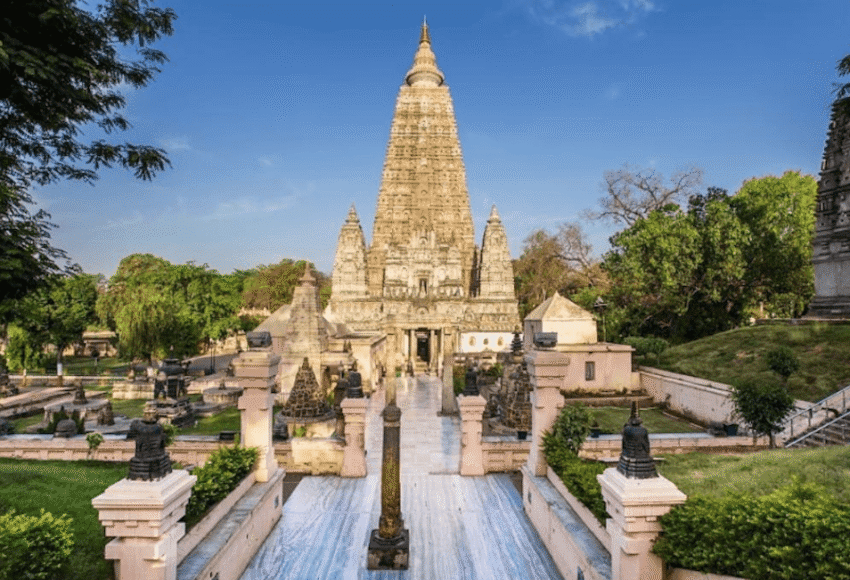
The Mahabodhi Temple stands at the spot in Bodh Gaya where Gautama Buddha is believed to have attained enlightenment while meditating under a Bodhi Tree. That makes Bodh Gaya one of Buddhism’s four most important pilgrimage sites, alongside Lumbini, Sarnath and Kushinagar, and the Mahabodhi Temple its centrepiece.
The temple is a UNESCO World Heritage Site, inscribed in 2002, and its tall central spire rises over a walled complex that includes the sacred Bodhi Tree — a descendant of the original tree, grown from a cutting — and the Vajrasana, the "Diamond Throne", a stone slab traditionally said to mark the exact spot of the enlightenment. Monks, monastics and pilgrims from across the Buddhist world sit and meditate in the grounds through the day.
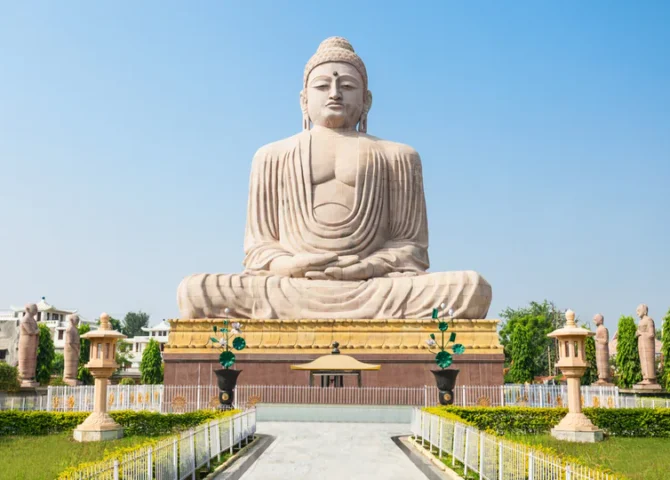
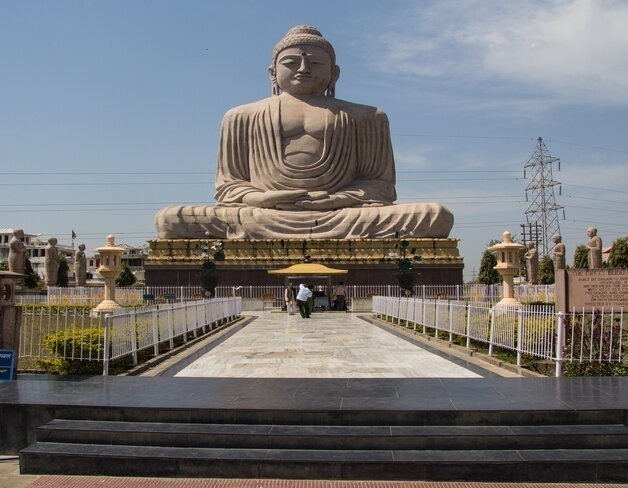
Most visitors combine the temple with the nearby Great Buddha Statue and the Thai, Japanese, Tibetan and Chinese monasteries that cluster around it in the same day — see our full Bodh Gaya places-to-visit guide for a suggested route.
- Commemorates
- The Buddha’s enlightenment under the Bodhi Tree
- Location
- Bodh Gaya, Gaya district, Bihar
- UNESCO status
- World Heritage Site, inscribed in 2002
- Original structure
- Traditionally linked to Emperor Ashoka in the 3rd century BCE, with major rebuilding since — reported by published sources
- The Bodhi Tree
- A descendant of the original tree, grown from a cutting, in the temple’s western courtyard
- The Vajrasana
- The "Diamond Throne" — a stone slab traditionally marking the exact spot of the enlightenment
- Entry
- General entry is free; a small camera/video charge may apply
- Best time to visit
- Early morning or evening, outside Buddha Purnima and other major festival dates
- Time to allow
- Roughly 1.5 to 2.5 hours
Why it matters
Significance of the Mahabodhi Temple
For Buddhists, the Mahabodhi Temple marks the single most significant site connected to the Buddha’s life — the place where, after years of searching, he is believed to have attained enlightenment while seated under the Bodhi Tree. A visit here, for many pilgrims, is the centrepiece of a trip to India’s Buddhist circuit.
The temple complex draws monks and lay visitors from Sri Lanka, Thailand, Myanmar, Tibet, Japan, Bhutan and beyond, alongside Indian and international travellers. The walled garden around the main spire is often filled with quiet groups meditating, chanting or performing prostrations near the Bodhi Tree and the Vajrasana.
Inside the complex
The Bodhi Tree and the Vajrasana
The Bodhi Tree growing today in the temple’s western courtyard is a descendant of the original pipal tree under which the Buddha is said to have meditated — grown from a cutting of a tree in Sri Lanka that was itself, by tradition, propagated from the original. Pilgrims often sit quietly near the tree, and the red sandstone railing enclosing it dates back many centuries.
Beside the tree sits the Vajrasana, or "Diamond Throne" — a polished stone slab traditionally said to mark the precise spot where the Buddha sat during his enlightenment. It is one of the most revered single points in the entire complex.
Access right up to the tree and the Vajrasana can be restricted at busy times, and rules on touching or leaving offerings are set by the temple management and can change — we check the current arrangement for your date.
How it came to be
A Brief History of the Temple
This guide focuses on the temple’s architectural and restoration history, for visitor planning — not a full account of Buddhist history.
- 3rd century BCE
Emperor Ashoka is traditionally said to have built the first shrine at the site, after visiting Bodh Gaya.
- 2nd–5th century CE
The main temple structure seen today is reported to date largely from this period, with later additions.
- 19th century
The temple underwent major restoration under British colonial administration, after centuries of decline.
- 2002
The Mahabodhi Temple Complex was inscribed as a UNESCO World Heritage Site.
Exact dates and the sequence of rebuilding vary between published sources, since the site has been repaired and restored several times over more than a thousand years.
On the day
What to Expect During Your Visit
The Mahabodhi Temple complex is calmer and less security-heavy than many major Indian pilgrimage sites, but it still draws large crowds, especially around Buddha Purnima (the Buddha’s birth anniversary) and other Buddhist festival dates. Expect a security check at the entrance, and be ready to remove your footwear before entering the walled complex.
-
1
Security check
Bags are checked at the gate; leave sharp items and large bags at your hotel where possible.
-
2
Footwear and phones
Footwear comes off before the walled complex. Rules on phones and cameras inside can change, so we confirm them for your date.
-
3
Walk the complex
Circle the main spire, the Bodhi Tree and the Vajrasana at your own pace — most visitors spend a while sitting quietly in the grounds.
-
4
Take your time
Unlike a fast-moving darshan queue, there is usually no rush here — many pilgrims stay for an hour or more.
Plan your visit
Mahabodhi Temple Visiting Hours
The complex is generally open from early morning to late evening. Treat these as approximate — they can shift with the season and on festival days.
| Session | Approximate time |
|---|---|
| Complex open | Roughly 5:00 AM to 9:00 PM |
| Quietest hours | Early morning, right after opening |
| Busiest period | Buddha Purnima and other major Buddhist festival dates |
These times are drawn from published sources and can change with the season. We confirm the current hours before your visit, especially around Buddha Purnima.
Etiquette
Rules, Dress & Etiquette
What to wear
Modest clothing that covers shoulders and knees. Simple, comfortable clothes are fine.
Footwear
Removed before entering the walled complex — wear something you can slip off easily.
Phones & cameras
Rules on carrying them inside change from time to time. We check the current policy for your date.
Quiet conduct
This is an active place of worship and meditation for many visitors — keep your voice down and be mindful near the Bodhi Tree.
Security checks
Expect a bag check and frisking at the entrance gate.
Circumambulation
Many pilgrims walk clockwise around the main shrine — follow the flow of the crowd rather than cutting across it.
Getting there
How to Reach the Mahabodhi Temple
Bodh Gaya has its own airport, and Gaya Junction is a short drive from the temple.
-
Step 1
By air
Gaya Airport (also called Bodh Gaya Airport) is a few kilometres from the temple. It largely serves seasonal and pilgrimage-circuit flights, so international connections can be limited — we check current routes for your date.
-
Step 2
By train
Gaya Junction is well connected on the Indian rail network, with a short onward drive or auto ride to the temple.
-
Step 3
From Varanasi
Bodh Gaya is roughly 250 km from Varanasi, about 5 to 6 hours by road, usually combined with Sarnath on the way. See our Varanasi Bodh Gaya packages or itinerary guide.
-
Step 4
Getting around locally
Once in Bodh Gaya, the temple, the Great Buddha Statue and most monasteries are close enough to cover on foot or by a short auto ride.
Local advice
Tips for a Smooth Visit
- Go early or late. The complex is calmer in the first hour after opening and again in the evening, when the temple is lit up.
- Allow time to sit. Unlike a fast-moving darshan queue, many visitors spend an hour or more here — build that into your day’s plan.
- Avoid Buddha Purnima if you dislike crowds. It is by far the busiest day of the year at the temple.
- Combine your visit. The Great Buddha Statue and the Thai, Japanese, Tibetan and Chinese monasteries are all a short distance away and pair naturally with a temple visit.
- Dress modestly and carry light. It makes the security check and the walk around the complex far more comfortable.
Plan a route
Places to Visit Near Mahabodhi Temple, Bodh Gaya
Combine these in one outing — each has its own visitor guide.
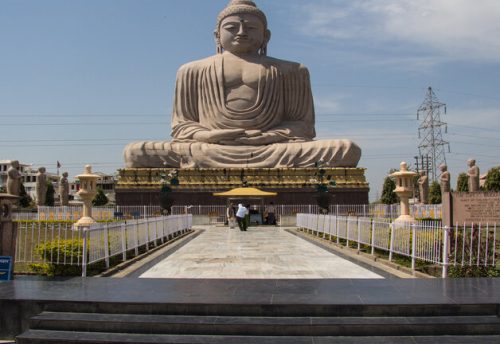
Great Buddha Statue, Bodh Gaya
An 80-foot statue of the Buddha in meditation, consecrated by the Dalai Lama in 1989.
Read the guide →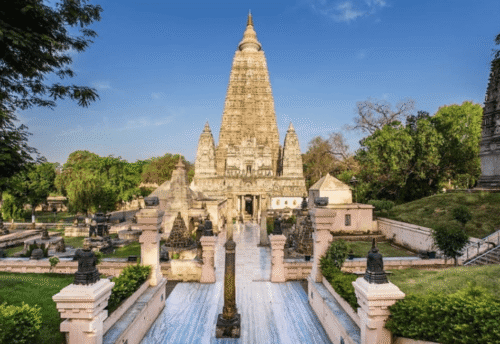
Bodh Gaya Monasteries
Thai, Japanese, Tibetan and Chinese temples, each in their own architectural style, clustered nearby.
Read the guide →In pictures
Mahabodhi Temple, Bodh Gaya: Photo Gallery

Quick answers
Mahabodhi Temple, Bodh Gaya: Frequently Asked Questions
The complex is generally open from roughly 5:00 AM to 9:00 PM. Hours can shift with the season and are busier around Buddha Purnima, so we confirm the current schedule before your visit.
Timings, rules and fees can change with the season and on festival days. Please confirm on the day, especially for darshan and aarti times.
Plan your visit
Make the Most of Your Bodh Gaya Trip
Bodh Gaya Travel Guide
Best time to visit, how to reach, and everything else to plan your trip.
Learn more →Varanasi + Bodh Gaya Tour Packages
Let our local team plan the whole trip, with pick-up and a private vehicle.
Learn more →Varanasi Cab Service
Book a private vehicle for the road trip from Varanasi.
Learn more →More Places to Visit in Bodh Gaya
Planning a Trip to Bodh Gaya?
Message us for real local advice on timings, routes and where to stay — from a Varanasi-based team that runs this route often.