
This is the written version of the Varanasi Ayodhya Prayagraj 3 nights 4 days itinerary, for anyone who would rather read every stop in order than scan the day cards above.
Day 1 in Detail: Old-City Temples & the Evening Aarti
Land in Varanasi, check in, and spend the day on the three old-city temples before the river takes over in the evening.
1. Check in and get your bearings
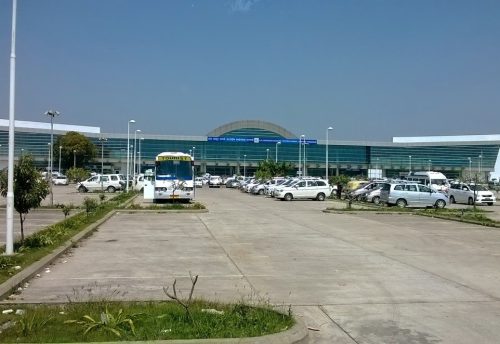
On arrivalHowever you arrive — a flight into Lal Bahadur Shastri Airport, or a train into Varanasi Junction or Manduadih — head straight to your hotel and drop your bags. This is the first of two nights in Varanasi, so there is no need to rush the first hour.
2. Kal Bhairav Temple
Late morningStart here, not at Kashi Vishwanath. Local custom has visitors seek Kal Bhairav's blessing — he is considered the guardian of the city — before the main temples. Open roughly 5:00 AM–1:30 PM and 4:30–9:30 PM; entry is free and 30–45 minutes is enough.
Auto and cab only get you to the edge of the lane — the last stretch to the shrine is on foot.
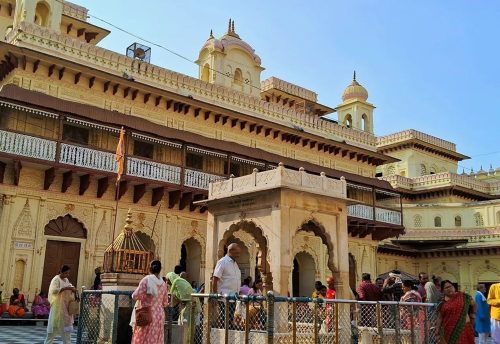
3. Kashi Vishwanath Temple
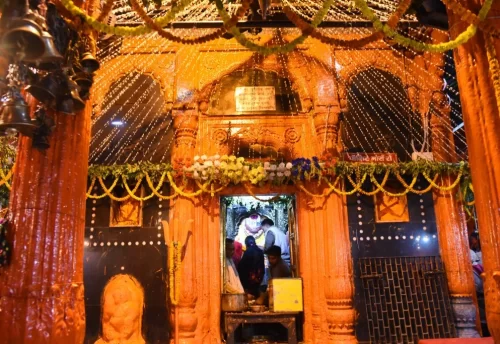
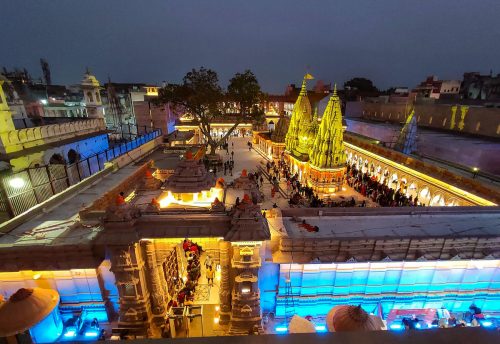
Late morningThe big one, and one of the twelve Jyotirlinga shrines of Shiva. The present temple was built in 1780 and is reached today through the Kashi Vishwanath Corridor, opened in December 2021. Leave your phone at the hotel or use a locker — electronics are not allowed inside.
Budget 1.5–3 hours depending on the queue. Mondays and the month of Shravan are the busiest.
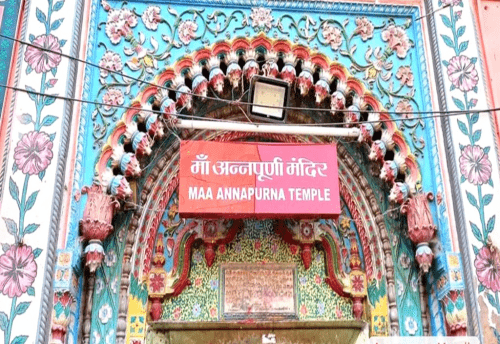
4. Annapurna Temple
MiddayA two-minute walk from Vishwanath. Note the odd hours — roughly 4:00–11:30 AM and 7:00–11:00 PM, closed most of the afternoon — so if you arrive here late morning, you may end up doubling back in the evening instead.
5. Break, or a walk through Vishwanath Gali
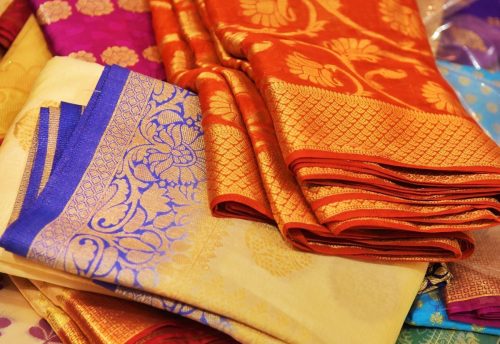
AfternoonThree temples on foot in old-city heat is enough for most people. Head back to the hotel, or use the break to browse Vishwanath Gali and the Godowlia market for Banarasi silk — there is no obligation to buy anything.
6. A boat ride before the aarti
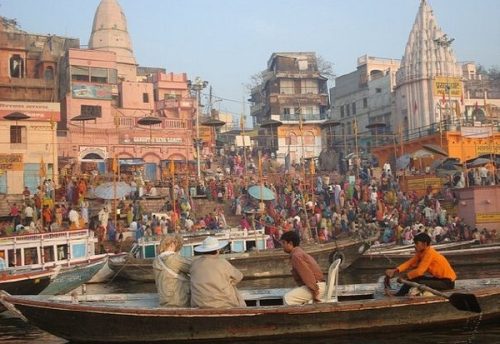
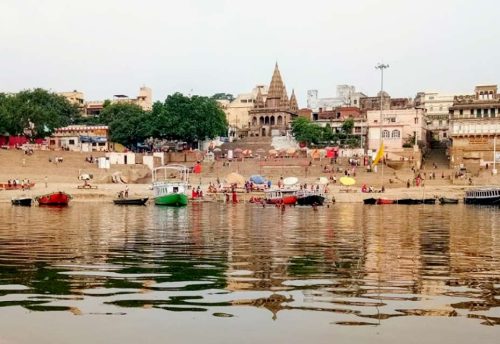
Evening, optionalNot essential, but worth the extra if you have the time. Boats leave from ghats such as Assi, Dashashwamedh, Namo and Kedar, and watching the aarti from the water beats the crowded steps.
Agree the fare before boarding if you are hiring one on the spot, or book ahead through us.
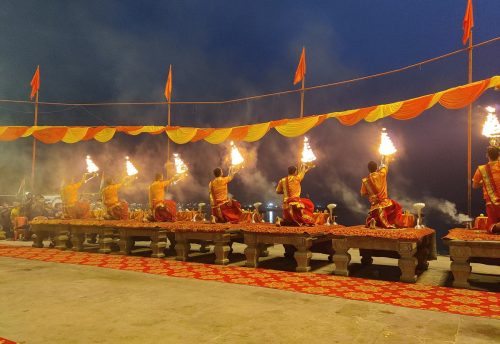
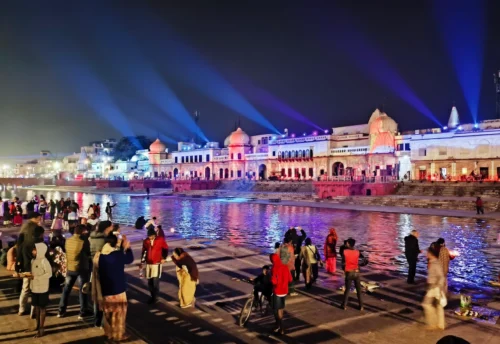
7. Ganga Aarti at Dashashwamedh Ghat
Around duskThe ritual begins around dusk — roughly 5:45–6:00 PM in winter, 6:45–7:00 PM in summer — and runs about 45 minutes.
Get to the ghat steps at least 45 minutes early if you want to sit rather than stand at the back.
8. Dinner and street food
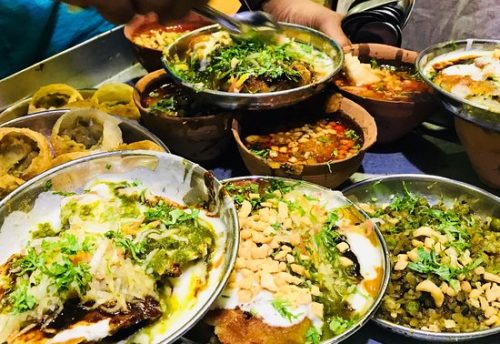
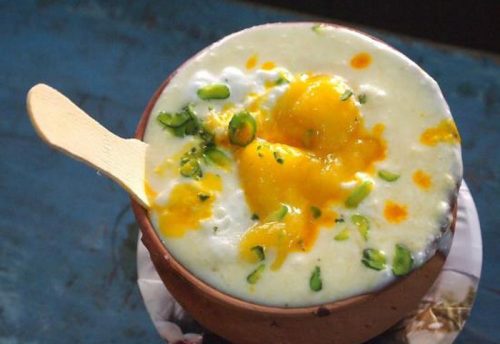
NightTamatar chaat, kachori-sabzi and a glass of thick Banarasi lassi are worth seeking out. Prices are low enough to eat at two or three stalls instead of committing to one restaurant.
Overnight in Varanasi — the first of two nights here. Book a hotel near the ghats or the Cantt area, so Day 2's early start is not a long drive — our own budget hotel near Assi Ghat is one option.
Day 2 in Detail: Southern Temples, BHU & Sarnath
A full second day in Varanasi: three more temples before mid-morning, then BHU, the saree market and Sarnath, before an early night ahead of the drive to Prayagraj.
1. Sunrise at Assi Ghat
Optional, before 7 AMSkip this if you value sleep over atmosphere. Subah-e-Banaras, the free government-run morning programme, starts around sunrise — about 5:30 AM, earlier in summer. It is the calmest the ghats ever get.
2. Durga Temple
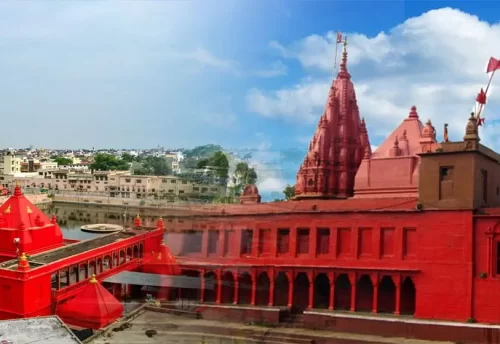
By 7 AMAlso called the Monkey Temple, for a reason — keep food out of sight. A red Nagara-style shrine from the 18th century beside Durga Kund; open 4:00 AM–1:00 PM and 3:00–9:00 PM, and 30 minutes is enough.
3. Tulsi Manas Mandir
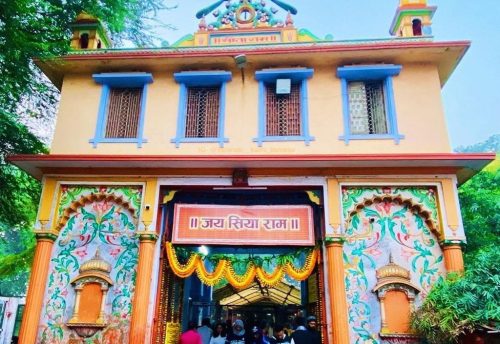
MorningA short walk from the Durga Temple, dedicated to Lord Rama and built where the saint Tulsidas is said to have written the Ramcharitmanas. Roughly 6:00 AM–8:00 PM in winter, 5:30 AM–9:00 PM in summer.
4. Sankat Mochan Hanuman Temple
MorningFounded, by tradition, by the poet-saint Tulsidas. No phones or cameras inside.
Busiest on Tuesdays and Saturdays — expect a longer queue on those days.
5. Banaras Hindu University & the New Vishwanath Temple
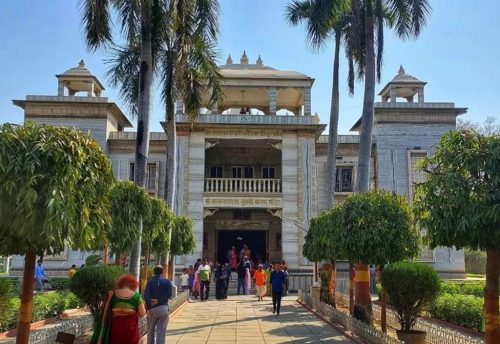
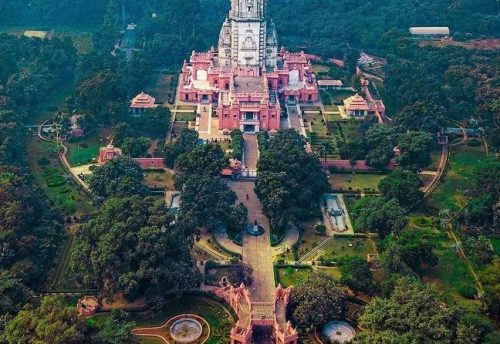
Late morningOne of Asia's largest residential university campuses — worth the drive-through alone. Stop at the New Vishwanath (Birla) Temple inside the campus, and add the Bharat Kala Bhavan museum if it happens to be open.
6. Breakfast, then the saree market
BreakfastHotel breakfast is the easy option, or look for kachori-sabzi and jalebi from a street stall, finished with a Banarasi paan. If you feel like shopping, this is also the time to browse the local handloom market for Banarasi silk — otherwise use the break to rest before Sarnath.
7. Sarnath
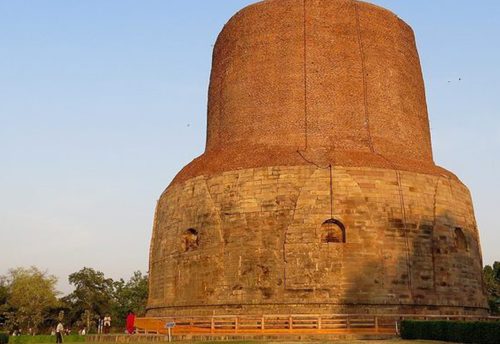
AfternoonAbout 10 km out, and where the Buddha is said to have given his first sermon. See the Dhamek Stupa, the Deer Park, the Chaukhandi Stupa and the Archaeological Museum if you have an extra half hour.
Give it 2–3 hours in total, including the drive.
8. Dinner and an early night
EveningReturn to the hotel for dinner and pack tonight, not tomorrow morning. Day 3 starts with a roughly 130 km drive to Prayagraj straight after breakfast.
Overnight in Varanasi — your second and last night here. Check-out is straight after breakfast tomorrow.
Day 3 in Detail: Varanasi to Prayagraj: the Sangam and the City's Landmarks
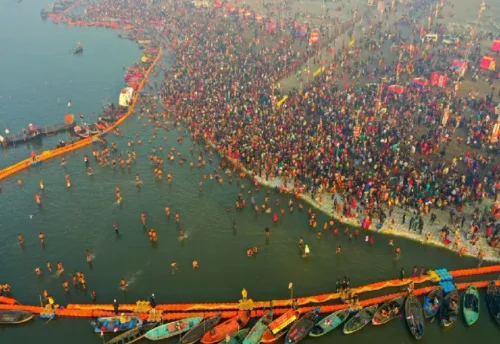
Today you leave Varanasi for Prayagraj, about 130 km away and roughly 2.5–3 hours by road. Prayagraj was known as Allahabad until 2018, and it sits at the Triveni Sangam — where the Ganga and Yamuna meet the mythical, invisible Saraswati. The Sangam is the reason most people come here, so the day is planned around a comfortable stretch of time at the water, with the landmarks around it filling out the rest of the day.
1. Drive from Varanasi to Prayagraj
Morning, after breakfastCheck out and set off. It is about 130 km, roughly 2.5–3 hours depending on traffic, so you should be in Prayagraj well before midday and have most of the day still ahead of you.
2. Lete Hanuman Mandir
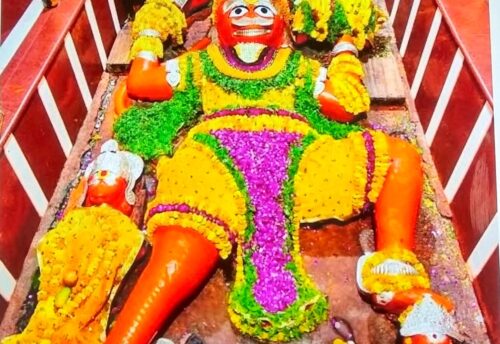
Late morningA unique temple close to the Sangam, with a large reclining Hanuman idol said to be partly submerged each year when the Ganga rises in the monsoon. It makes a natural stop just before the boat ride, so visit it on your way to the water.
3. Triveni Sangam: boat ride and a holy dip
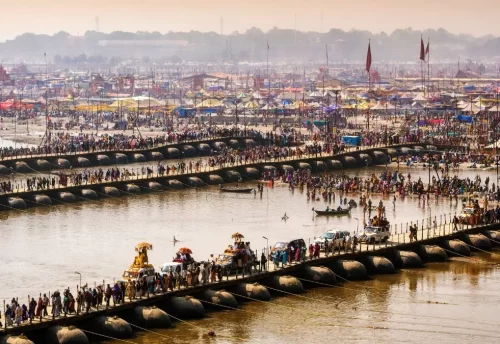
MiddayA dip at the confluence is the centrepiece of most visits. The boat ride out to the meeting point is not something you have to book ahead — hire one at the ghat, and bring a change of clothes and a towel if you plan to bathe. Leave valuables back at the hotel or in the vehicle.
Prayagraj hosts the Kumbh Mela on a rotating cycle and the smaller Magh Mela every January or February; the Sangam is far busier at those times, so check your dates against the calendar before you plan this day too tightly.
4. Anand Bhavan
AfternoonThe Nehru family's ancestral home, now a museum on India's independence movement — worth the detour if that history interests you. Museums keep their own hours, so confirm before you plan your arrival time.
5. Allahabad Fort
AfternoonBuilt by Akbar in 1583 beside the Sangam. Much of it is under military use today, so public access is limited to a few parts: the Ashoka Pillar, the Saraswati Koop and the Patalpuri Temple. The complex also holds the Akshaya Vat, a centuries-old banyan tree considered indestructible.
Which sections are open can change — confirm locally on the day rather than assuming full access.
6. Khusro Bagh
If time allowsA walled Mughal-era garden with the tombs of Prince Khusrau and his mother — a calm, quiet stop to close out a full day, if you still have the light and the energy for it.
7. Check in and rest
EveningPrayagraj does not have its own hotel page on this site, so book directly or ask us to arrange it. Dinner is not part of this plan either — eat where you like near your hotel.
Overnight in Prayagraj — your only night outside Varanasi before Ayodhya. Tomorrow is another travel day, so an early night helps.
Day 4 in Detail: Prayagraj to Ayodhya: the Ram Mandir and the Saryu
The last day is a drive followed by a compact Ayodhya visit, since there is no overnight stay in the city on this itinerary. Allow roughly four hours on the road from Prayagraj, and more if traffic is heavy — the earlier you leave, the more relaxed the rest of the day at the temples.
1. Drive from Prayagraj to Ayodhya
Morning, after breakfastCheck out and set off for Ayodhya. Allow roughly four hours on the road. Varanasi, Prayagraj and Ayodhya are commonly combined this way, and the drive links two of the most important places on the Rama pilgrimage circuit.
2. Hanuman Garhi
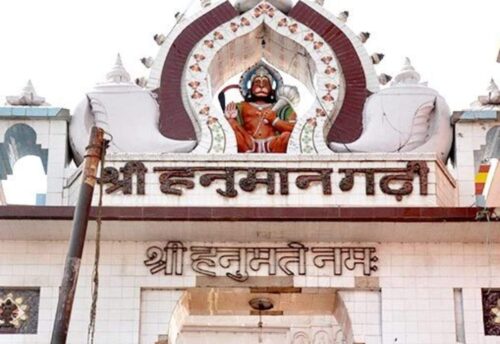
AfternoonA hilltop temple to Hanuman, and by tradition it is visited before the Ram Mandir. A flight of steps leads up to it, so wear comfortable footwear, and expect it to be busier on Tuesdays and Saturdays, Hanuman's days.
3. Ram Janmabhoomi Temple (Ram Mandir)
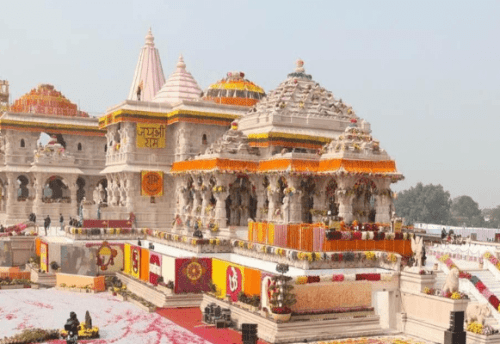
AfternoonThe birthplace of Lord Rama and the centrepiece of the day, consecrated in January 2024. Security is strict — mobile phones, bags and similar items are generally not allowed inside, so travel light and wear modest, easy-to-remove footwear.
Entry arrangements such as darshan slots and passes are set by the temple trust and change, so confirm the current rules for your date before you travel.
4. Kanak Bhawan
AfternoonDedicated to Rama and Sita, and believed to have been gifted to Sita by Kaikeyi. Known for its richly adorned idols and its quieter, more peaceful atmosphere compared with the Ram Mandir crowds.
5. Dasharath Mahal, Ramkatha Park & Guptar Ghat
If time allowsThree optional add-ons if the day has run ahead of schedule: Dasharath Mahal, tied by tradition to King Dasharatha, Rama's father; Ramkatha Park, a quiet park dedicated to Rama's life; and Guptar Ghat, a quieter riverside ghat believed to be where Rama took his final jal samadhi. Drop these first if you are short on daylight.
6. Ram ki Paidi and the Saryu Aarti
EveningA series of bathing ghats on the Saryu, and the usual spot for the evening aarti and a last walk by the river before you leave. The aarti follows sunset, so its time shifts with the season.
7. Drop at Ayodhya Dham Junction or the airport
EveningThe trip ends here — at Ayodhya Dham Junction railway station or Maharishi Valmiki International Airport for onward travel, or back on the road to Varanasi if you would rather return the way you came.
Trip ends with your drop at Ayodhya Dham Junction or Maharishi Valmiki International Airport — or a drive back to Varanasi, if you'd rather.
Good to Know Before You Go
- Phones and cameras are not allowed inside Kashi Vishwanath, Sankat Mochan or the Ram Mandir — travel light on temple stops.
- Dress modestly for every temple on this route: shoulders and knees covered, and shoes that are easy to slip off.
- The old-city lanes to Kal Bhairav, Annapurna and Kashi Vishwanath in Varanasi are walked, not driven — factor in the extra time.
- Carry a towel and a change of clothes to Prayagraj if you plan to take a dip at the Sangam.
- Two of the four days involve several hours of driving — Varanasi to Prayagraj (~130 km) and Prayagraj to Ayodhya (~4 hours). Pace the sightseeing around the drive rather than the other way round.
- Entry rules at the Ram Mandir and access at Allahabad Fort both change and are set by their respective authorities — confirm locally for your dates rather than assuming.
- Timings here come from published visitor guides and shift on festival days, and especially around the Kumbh Mela or Magh Mela in Prayagraj — confirm locally if your dates fall near one.