
Prayagraj · Lete Hanuman Mandir · Near the Sangam
Lete Hanuman Mandir, Prayagraj Darshan & visitor guide
A temple built around a large reclining Hanuman idol, close to the Sangam and usually visited just before a boat ride to the confluence.
The basics
What Is the Lete Hanuman Mandir in Prayagraj?
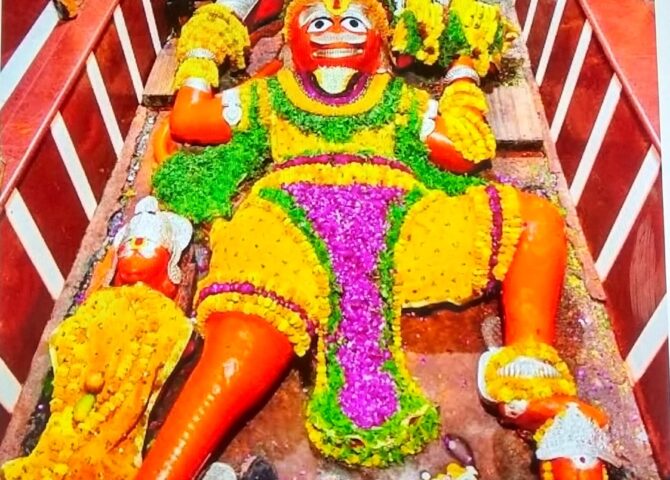
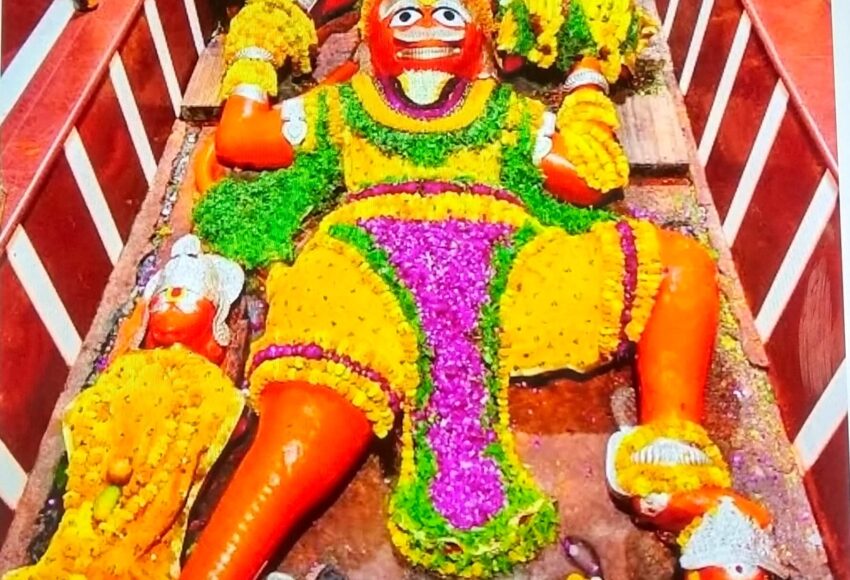
The Lete Hanuman Mandir is a unique temple near the Sangam, built around a large reclining Hanuman idol — "lete" means "lying down" in Hindi, describing the idol's distinctive resting posture, unlike the standing or seated Hanuman murtis found at most other temples.
The idol is reported to be among the largest reclining Hanuman idols in India. Local tradition holds that it is partly submerged each year when the Ganga rises during the monsoon — a detail that adds to the temple's draw for visitors and devotees alike.
Because of its location, the temple is usually the first stop on a Sangam outing: most visitors take darshan here just before heading to the Triveni Sangam for the boat ride and holy dip, then continue to Allahabad Fort and Anand Bhavan later in the day.
| Deity | Lord Hanuman, in a reclining ("lete") posture |
|---|---|
| Location | Near the Sangam, Prayagraj, Uttar Pradesh |
| Known for | A large reclining Hanuman idol — reported to be among the largest of its kind in India |
| Monsoon note | The idol is said to be partly submerged when the Ganga rises each monsoon |
| Usual visit pattern | Often visited just before a Sangam boat ride, as part of the same outing |
| Time to allow | Around 20 to 30 minutes for darshan |
| Best time to visit | Late morning, October to March |
Why it matters
Significance of the Lete Hanuman Mandir
Hanuman temples are common across North India, but a reclining idol on this scale is unusual, which is part of why this temple draws pilgrims in its own right, not only as a stop on the way to the Sangam. Popular belief connects the resting posture to episodes from the Ramayana where Hanuman is shown resting after his exertions, though this guide does not assert a single settled account — several local versions of the story circulate.
The temple's closeness to the Sangam, and the striking image of the idol partly underwater each monsoon, have made it one of the more distinctive stops on the Prayagraj pilgrim circuit.
A local tradition
The Reclining Idol & the Monsoon
Every year, as the Ganga rises during the monsoon, the temple is said to flood, submerging the lower part of the reclining idol — a detail widely repeated by pilgrims and local guides, though our team has not independently verified the exact extent each year, since river levels vary by season.
If you plan to visit during the monsoon months (roughly July to September), check with us or with the temple directly beforehand, since darshan arrangements are likely to be affected by flooding at that time.
On the day
What to Expect During Darshan
-
1
Reach the temple
It sits close to the Sangam ghats, usually the first stop before heading to the confluence.
-
2
Join the queue
Queues are generally short compared to major temples, though they lengthen on festival days and during Mela season.
-
3
Take darshan
View the reclining idol and offer prayers — a brief, calm visit for most pilgrims.
-
4
Continue to the Sangam
Most visitors head straight on to the ghat for the boat ride and holy dip afterwards.
Plan your visit
Lete Hanuman Mandir Darshan Timings
Published timings generally suggest the temple is open through the day, from early morning into the evening, in line with most temples on the Sangam circuit. Exact hours and any special arrangements around festivals or the monsoon can change, so we confirm the current schedule before your visit.
Etiquette
Rules, Dress & Etiquette
What to wear
Modest clothing that covers shoulders and knees, as at any temple visit.
Footwear
Removed before entering — wear something you can slip off easily.
Photography
Check with temple staff before photographing the sanctum directly.
Queues
Generally short, but stay patient on festival days and during Mela season.
Getting there
How to Reach the Lete Hanuman Mandir
The temple is close to the Sangam ghats, so directions are largely the same.
-
Step 1
By air
Prayagraj Airport (Bamrauli) has domestic flights connecting to several major Indian cities.
-
Step 2
By train
Prayagraj Junction is one of North India's major railway hubs, with frequent trains from Delhi, Varanasi, Lucknow and beyond.
-
Step 3
From Varanasi
About 130 km, roughly 2.5 to 3 hours by road. We run this route regularly — see our Varanasi Ayodhya Prayagraj packages or itinerary guide.
Local advice
Tips for a Smooth Visit
- Visit before the Sangam. This is the usual order, and it keeps your morning efficient.
- Go on a weekday for a calmer, quicker darshan.
- Check ahead in monsoon. Rising Ganga levels between roughly July and September can affect access to the idol.
- Keep it brief. This is a short stop compared to the rest of a Prayagraj day — allow 20 to 30 minutes and move on.
Plan a route
Places to Visit Near Lete Hanuman Mandir
Combine these in one outing — each has its own visitor guide.

Triveni Sangam, Prayagraj
A short walk away — the holy confluence, usually visited right after this temple.
Read the guide →
Allahabad Fort
Akbar's fort beside the Sangam, with limited public access.
Read the guide →Anand Bhavan
The Nehru family's ancestral home, now a museum on the independence movement.
Read the guide →In pictures
Lete Hanuman Mandir: Photo Gallery

Quick answers
Lete Hanuman Mandir: Frequently Asked Questions
It is built around a large reclining Hanuman idol — "lete" meaning "lying down" — a distinctive posture compared to the standing or seated Hanuman idols found at most other temples.
Timings, rules and fees can change with the season and on festival days. Please confirm on the day, especially for darshan and aarti times.
Plan your visit
Make the Most of Your Prayagraj Trip
Prayagraj Travel Guide
Best time to visit, how to reach, and everything else to plan your trip.
Learn more →Varanasi + Prayagraj Tour Packages
Let our local team plan the whole trip, with pick-up and a private vehicle.
Learn more →Varanasi Cab Service
Book a private vehicle for the road trip from Varanasi.
Learn more →More Places to Visit in Prayagraj
Planning a Trip to Prayagraj?
Message us for real local advice on timings, routes and where to stay — from a Varanasi-based team that runs this route often.