

Skip to content
Best Varanasi Tour Planner — Kashi Yatra

Travel Guide · Varanasi Ayodhya Prayagraj 4 Nights 5 Days

Varanasi Ayodhya Prayagraj 4 Nights 5 Days Itinerary

A day-by-day plan for the Golden Triangle at an easier pace: two days in Kashi, a day at the Sangam in Prayagraj, and a full night in Ayodhya before the Ram Mandir darshan, so nothing is rushed. It is the same route our team runs as a package — follow it yourself, or hand it to us.

Before you start

Varanasi Ayodhya Prayagraj 4 Nights 5 Days Itinerary Overview

This is the same Golden Triangle route as our 3 nights 4 days itinerary — Varanasi, then Prayagraj, then Ayodhya — with one difference that matters: a full night in Ayodhya before the Ram Mandir, instead of fitting the drive in and the darshan into the same day. If an unhurried morning at the temple matters more to you than saving a day, this is the version to follow.

The shape of it: two full days in Varanasi covering the old-city temples, the Ganga Aarti, BHU and Sarnath; a day of driving and sightseeing in Prayagraj at the Sangam; an afternoon and evening in Ayodhya; then an early Ram Mandir darshan on the last morning with nothing else scheduled before it.

Most of this route works with a hired car and driver, since it covers roughly 330 km of driving across the five days. The one stretch that is on foot regardless of how you travel is the old-city lane to Kal Bhairav, Kashi Vishwanath and Annapurna — no vehicle reaches it.

Varanasi Ayodhya Prayagraj 4 Nights 5 Days Itinerary at a glance, by day
DayMorningAfternoonEvening
Day 1
Old city & Aarti
Arrival · Kal Bhairav → Kashi Vishwanath → AnnapurnaBreak, or Vishwanath GaliBoat (optional) + Ganga Aarti
Day 2
Southern temples & Sarnath
Durga → Tulsi Manas → Sankat Mochan → BHUBreakfast, then SarnathDinner and an early night
Day 3
Varanasi to Prayagraj
Drive (~130 km), Lete HanumanSangam, Anand Bhavan, Allahabad FortKhusro Bagh, check in Prayagraj
Day 4
Prayagraj to Ayodhya
Drive (~4 hrs), check inHanuman Garhi, Kanak BhawanRam ki Paidi & the Saryu aarti
Day 5
Ram Mandir & departure
Early Ram Mandir darshanRamkatha Park, Guptar Ghat (if time)Drop at Ayodhya

Day by day

Varanasi, Ayodhya and Prayagraj Itinerary: Day-by-Day Plan

Prefer to read it all as text? Jump to the full written itinerary.

DAY1

Old-City Temples & the Evening Aarti in Varanasi

Land in Varanasi, settle in, and give the day to the three old-city temples before the river takes over at dusk.

  1. On arrival
    Varanasi airport terminal where visitors arrive

    Check in and get your bearings

    Whether you land at Lal Bahadur Shastri Airport or come in by train to Varanasi Junction or Manduadih, go straight to your hotel first. This is a five-day trip across three cities, so there is no need to rush the first hour — settle in properly before the old city starts pulling at you.

  2. Late morning
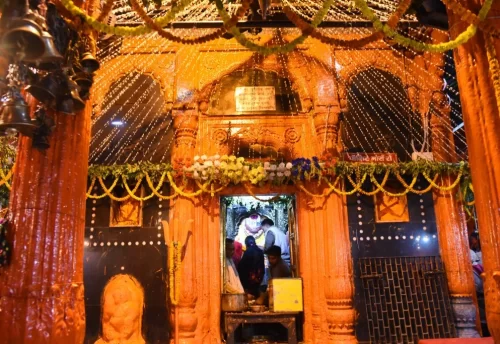
    Decorated entrance of the Kal Bhairav Temple in Varanasi

    Kal Bhairav Temple

    Custom has visitors ask Kal Bhairav's permission before the main temples — he is considered the guardian of Kashi. It is open roughly 5:00 AM–1:30 PM and 4:30–9:30 PM, entry is free, and 30–45 minutes is enough.

    The last stretch to the shrine is on foot — no vehicle reaches the lane.

  3. Late morning
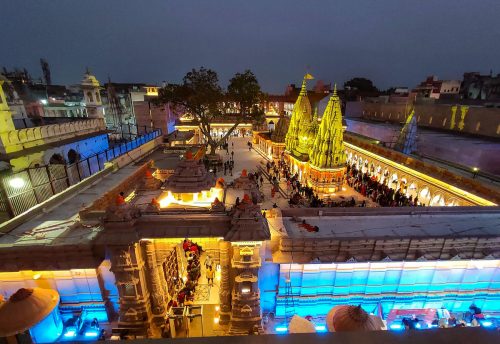
    Kashi Vishwanath Temple and its corridor lit up at night, Varanasi

    Kashi Vishwanath Temple

    The centrepiece of the old city: one of the twelve Jyotirlinga shrines, rebuilt in 1780 and reached today through the Kashi Vishwanath Corridor that opened in December 2021. Phones and cameras are not allowed inside, so use a locker or leave them at the hotel.

    Budget 1.5–3 hours depending on the queue — Mondays and the month of Shravan are the busiest.

  4. Midday
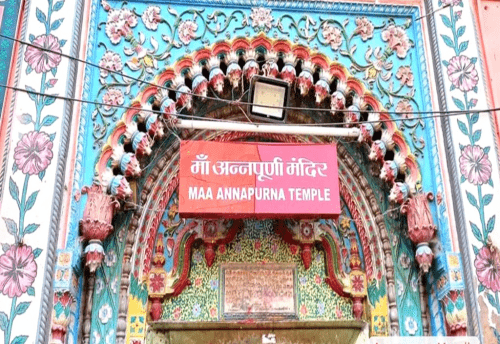
    The decorated entrance arch of the Annapurna Temple in Varanasi

    Annapurna Temple

    A two-minute walk from Vishwanath. Hours run roughly 4:00–11:30 AM and 7:00–11:00 PM — closed most of the afternoon — so if you arrive here late morning, you may end up back this evening instead.

  5. Afternoon
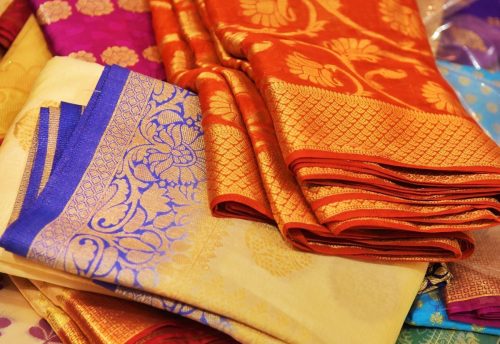
    Colourful Banarasi silk sarees in a Varanasi market

    Break, or a walk through Vishwanath Gali

    Three temples on foot in old-city heat is enough for most people. Head back to the hotel, or use the break to browse Vishwanath Gali and the Godowlia market for Banarasi silk — there is no obligation to buy anything.

  6. Evening, optional
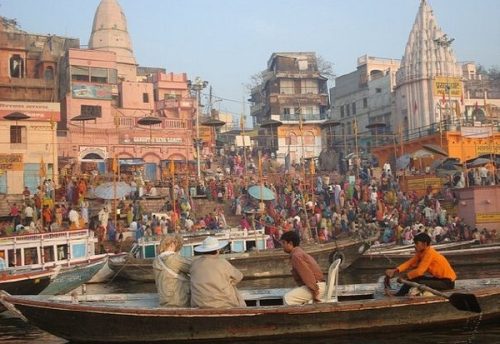
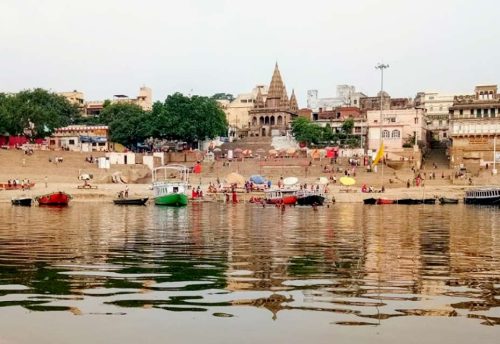
    A rowing boat among the crowded ghats of Varanasi

    A boat ride before the aarti

    Not essential, but worth it if you have the time. Boats leave from ghats such as Assi, Dashashwamedh, Namo and Kedar, and watching the aarti from the water beats the crowded steps.

    Agree the fare before boarding if you are hiring one on the spot, or book ahead through us.

  7. Around dusk
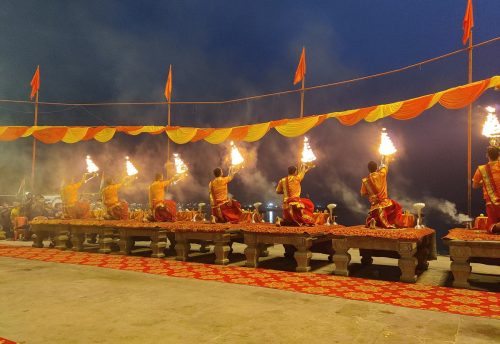
    Priests performing the Ganga Aarti on the Varanasi ghats at dusk

    Ganga Aarti at Dashashwamedh Ghat

    The ritual begins around dusk — roughly 5:45–6:00 PM in winter, 6:45–7:00 PM in summer — and runs about 45 minutes.

    Get to the ghat steps at least 45 minutes early if you want to sit rather than stand at the back.

  8. By boat or on foot, optional
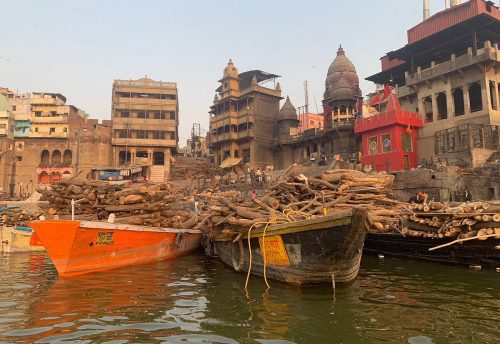
    Boats and the ghat buildings at Manikarnika Ghat, Varanasi

    Manikarnika Ghat

    The main cremation ghat, best seen from the water at a respectful distance if you choose to see it at all. It is a place of mourning — do not photograph the cremations.

  9. After the aarti
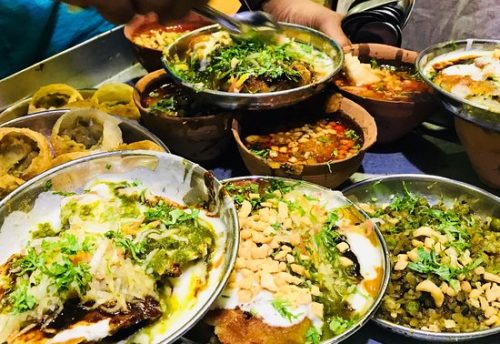
    A spread of Varanasi chaat served in clay bowls and steel plates

    Dinner and street food

    Tamatar chaat, kachori-sabzi and a glass of thick Banarasi lassi are worth seeking out. Prices are low enough to eat at two or three stalls instead of committing to one restaurant.

Overnight in Varanasi — the first of two nights here. A hotel near the ghats keeps tomorrow's early start short; our own budget hotel near Assi Ghat is one option.

DAY2

Southern Temples, BHU & Sarnath

A full second day in Varanasi: three more temples before breakfast, then the university campus and Sarnath, with the evening free to rest before you head out to Prayagraj.

  1. Optional, before 7 AM
    View across the Ganga towards Assi Ghat in Varanasi

    Sunrise at Assi Ghat

    Skip this if you would rather sleep in. Subah-e-Banaras, the free government-run morning programme, starts around sunrise — about 5:30 AM, earlier in summer — and the ghats are at their calmest.

  2. By 7 AM
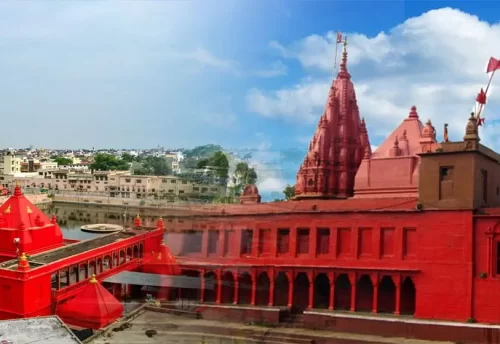
    The red Durga Temple beside Durga Kund in Varanasi

    Durga Temple

    Also called the Monkey Temple, for a reason — keep food out of sight. An 18th-century red Nagara-style shrine beside Durga Kund, open 4:00 AM–1:00 PM and 3:00–9:00 PM; 30 minutes is enough.

  3. Morning
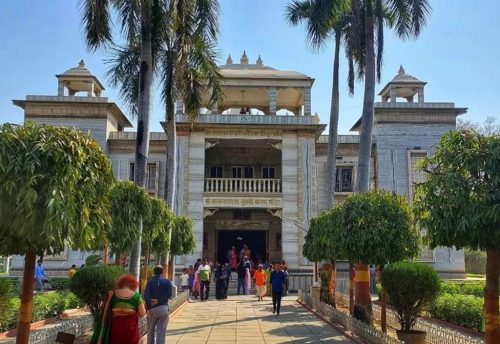
    The white marble Tulsi Manas Mandir and its garden path in Varanasi

    Tulsi Manas Mandir

    A short walk from the Durga Temple, dedicated to Lord Rama and built where the saint Tulsidas is said to have written the Ramcharitmanas. Roughly 6:00 AM–8:00 PM in winter, 5:30 AM–9:00 PM in summer.

  4. Morning
    Entrance of the Sankat Mochan Hanuman Temple in Varanasi

    Sankat Mochan Hanuman Temple

    Founded, by tradition, by the poet-saint Tulsidas. No phones or cameras inside.

    Busiest on Tuesdays and Saturdays — expect a longer queue on those days.

  5. Late morning
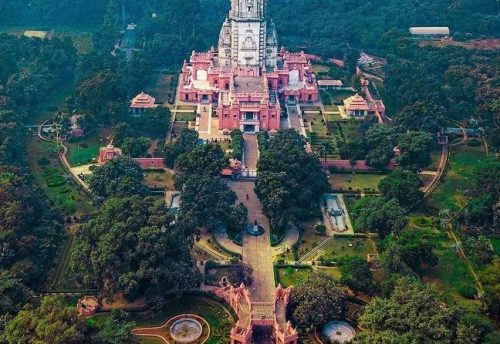
    Aerial view of the Banaras Hindu University campus and the New Vishwanath Temple

    Banaras Hindu University & the New Vishwanath Temple

    One of Asia's largest residential university campuses — worth the drive-through alone. Stop at the New Vishwanath (Birla) Temple inside the campus, and add the Bharat Kala Bhavan museum if it happens to be open.

  6. Breakfast
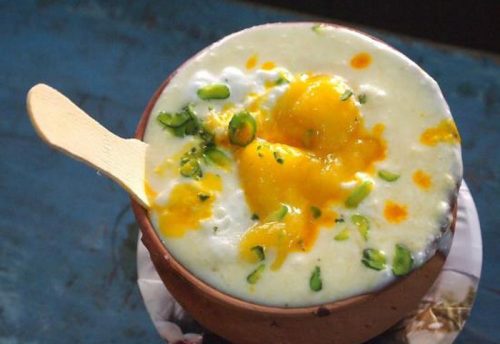
    A clay cup of lassi topped with saffron and pistachios, a Varanasi favourite

    Breakfast — hotel or street style

    Hotel breakfast is the easy option. For the local version, look for kachori-sabzi and jalebi from a street stall, finished with a Banarasi paan.

  7. Afternoon
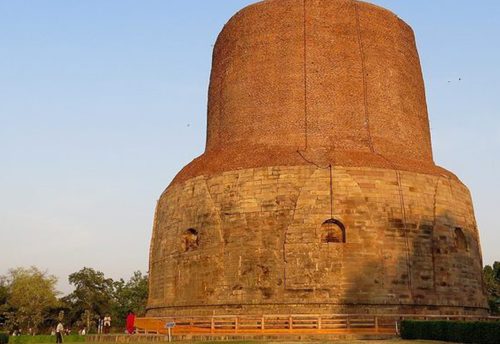
    The brick Dhamek Stupa at Sarnath near Varanasi

    Sarnath

    About 10 km out, and where the Buddha is said to have given his first sermon. See the Dhamek Stupa, the Deer Park, the Chaukhandi Stupa and the Archaeological Museum if you have an extra half hour.

    Give it 2–3 hours in total, including the drive.

  8. Evening

    Dinner and an early night

    You have a longer drive ahead tomorrow, so keep the evening light — dinner near the hotel and an early night sets you up for the road to Prayagraj.

Second night in Varanasi. Keep your bags packed for an after-breakfast start tomorrow.

DAY3

Varanasi to Prayagraj: The Sangam

Leave Varanasi after breakfast for Prayagraj, about 130 km away, and spend the rest of the day at the Sangam and the city's landmarks.

  1. Morning

    Drive to Prayagraj

    After breakfast and check-out, it is about 130 km to Prayagraj — roughly 2.5 to 3 hours by road. Prayagraj was called Allahabad until 2018, and it sits at the Triveni Sangam, where the Ganga and Yamuna meet the mythical, invisible Saraswati.

  2. Late morning
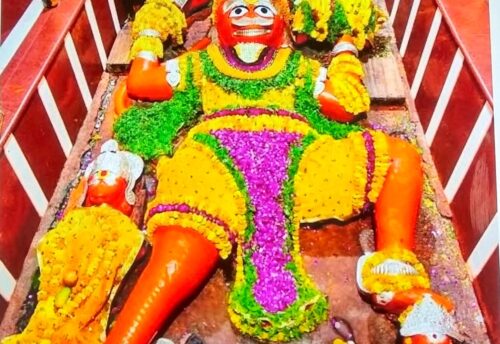
    The reclining Hanuman idol at the Lete Hanuman Mandir in Prayagraj, decorated with flowers

    Lete Hanuman Mandir

    A short stop close to the Sangam — a large reclining Hanuman idol that is said to be partly submerged each year when the Ganga rises in the monsoon.

  3. Midday
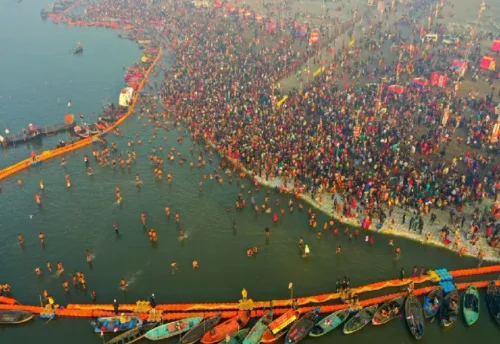
    Pilgrims and boats at the Triveni Sangam in Prayagraj during a Kumbh Mela

    Triveni Sangam: boat ride and a holy dip

    The reason most people come here. A holy dip at the meeting of the three rivers is the centrepiece of the visit, and a boat out to the confluence gets you closer to it.

    The boat and the dip are not fixed into the plan — book at the ghat, or ask us to arrange it. Carry a change of clothes and a towel if you mean to bathe.

  4. Afternoon

    Anand Bhavan

    The Nehru family's ancestral home, now a museum on India's independence movement — worth it if that history interests you. Museums keep their own hours, so confirm before you go.

  5. Afternoon

    Allahabad Fort

    Built by Akbar in 1583 beside the Sangam. Much of it is under military use today, so public access is limited — the Ashoka Pillar, Saraswati Koop and Patalpuri Temple are the parts usually open, along with the ancient Akshaya Vat banyan tree.

    Access changes without much notice — check locally on the day.

  6. If time allows

    Khusro Bagh

    A walled Mughal-era garden with the tombs of Prince Khusrau and his mother — a calm, unhurried place to end the day if you have the time.

  7. Evening

    Check in and rest

    Head to your Prayagraj hotel for the night. Dinner is not part of this plan — eat wherever you like near the hotel.

Overnight in Prayagraj — the only night of this trip outside Varanasi and Ayodhya.

DAY4

Prayagraj to Ayodhya: Hanuman Garhi, Kanak Bhawan & the Saryu

Drive on to Ayodhya, then spend the afternoon and evening on Hanuman Garhi, Kanak Bhawan and the Saryu ghats — the Ram Mandir itself is saved for tomorrow morning.

  1. Morning

    Drive to Ayodhya

    After breakfast and check-out, allow roughly four hours on the road from Prayagraj to Ayodhya — more if traffic is heavy. This is the leg that makes the extra night worthwhile: you arrive unhurried instead of packing Ayodhya into a single afternoon.

  2. On arrival
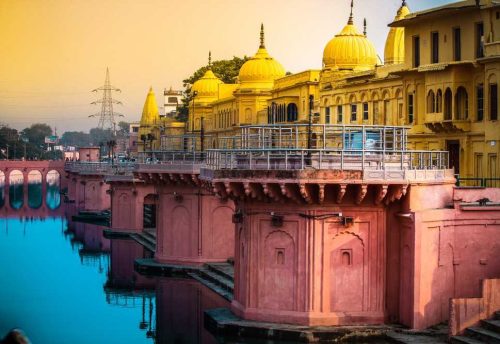
    A riverside palace and ghat on the Saryu in Ayodhya

    Check in and settle in

    Ayodhya sits on the Saryu and is revered as Lord Rama's birthplace, one of Hinduism's seven most sacred cities. Check in, freshen up, and take a short break before the afternoon.

  3. Afternoon
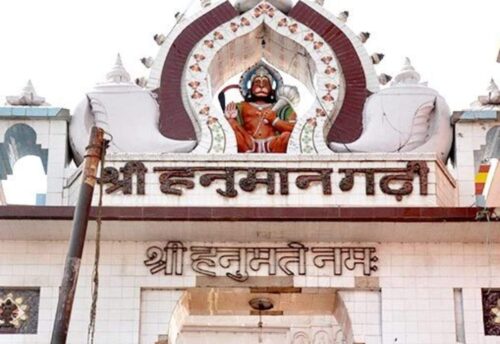
    The entrance gate of the Hanuman Garhi temple in Ayodhya

    Hanuman Garhi

    A hilltop temple to Hanuman, and by tradition the temple to visit before the Ram Mandir. A flight of steps leads up to it, so wear shoes you can climb comfortably in.

    Tuesdays and Saturdays, Hanuman's days, tend to be busier.

  4. Afternoon
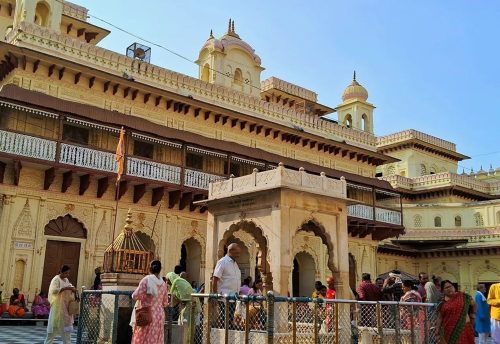
    The courtyard of the Kanak Bhawan temple in Ayodhya

    Kanak Bhawan

    Dedicated to Ram and Sita, and believed to have been gifted to Sita by Kaikeyi — known for its richly adorned idols and a genuinely peaceful atmosphere. Hours shift through the year, so confirm locally.

  5. If time allows

    Dasharath Mahal

    An optional stop at the palace traditionally linked to King Dasharatha, Rama's father — easy to add if the afternoon has room to spare.

  6. Evening
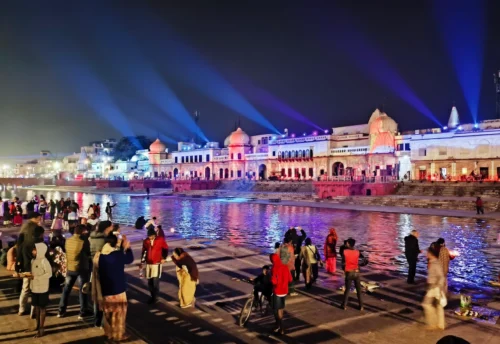
    The ghats of Ram ki Paidi in Ayodhya lit up in the evening

    Ram ki Paidi and the Saryu aarti

    A series of bathing ghats along the Saryu, and the setting for the evening aarti — a quieter, less crowded version of what you saw in Varanasi. It follows sunset, so the time shifts with the season.

Overnight in Ayodhya. This is the night the four-day version of this trip skips — it is what makes tomorrow's Ram Mandir darshan unhurried.

DAY5

Ram Mandir Darshan & Departure

An early, calm morning at the Ram Mandir, then whatever else fits before your drop — no drive to get through first.

  1. Early morning
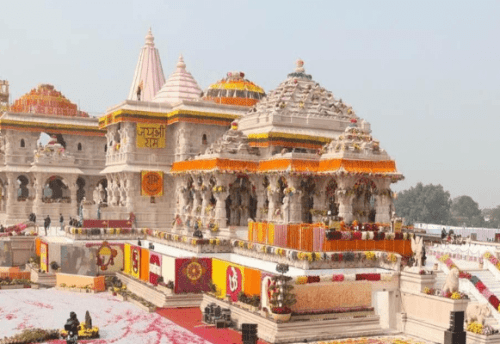
    The Ram Mandir in Ayodhya with its carved stone spires

    Ram Janmabhoomi Temple (Ram Mandir)

    The birthplace of Lord Rama, and the reason most people build a trip around Ayodhya at all. The temple was consecrated in January 2024, and going early — straight after breakfast, with no onward drive weighing on the morning — is the whole point of the extra night.

    Security is strict: phones and bags generally are not allowed inside. Darshan slots and entry rules are set by the temple trust and do change, so confirm them for your date before you go.

  2. If time allows

    Ramkatha Park

    A park dedicated to the life of Lord Rama — a quiet place to sit between temple visits, if the morning has left you any spare time.

  3. If time allows

    Guptar Ghat

    A quieter ghat on the Saryu, believed to be where Rama took his jal samadhi. Less crowded than the ghats nearer the centre of town.

  4. Departure

    Drop at Ayodhya Dham Junction or the airport

    Head to Ayodhya Dham Junction or Maharishi Valmiki International Airport with time in hand. Build in some buffer — this is the end of a five-day trip, not the moment to cut it close.

Trip ends with your drop at Ayodhya.

For a careful read

Read the Full Varanasi, Ayodhya and Prayagraj Itinerary

Prefer to read it start to finish rather than scan the cards above? Here is the same plan as plain text.

This is the written version of the Varanasi Ayodhya Prayagraj 4 Nights 5 Days Itinerary, for anyone who would rather read every stop in order than scan the day cards above.


Day 1 in Detail: Old-City Temples & the Evening Aarti in Varanasi

Land in Varanasi, settle in, and give the day to the three old-city temples before the river takes over at dusk.

1. Check in and get your bearings

On arrival

Whether you land at Lal Bahadur Shastri Airport or come in by train to Varanasi Junction or Manduadih, go straight to your hotel first. This is a five-day trip across three cities, so there is no need to rush the first hour — settle in properly before the old city starts pulling at you.

2. Kal Bhairav Temple

Late morning

Custom has visitors ask Kal Bhairav's permission before the main temples — he is considered the guardian of Kashi. It is open roughly 5:00 AM–1:30 PM and 4:30–9:30 PM, entry is free, and 30–45 minutes is enough.

The last stretch to the shrine is on foot — no vehicle reaches the lane.

3. Kashi Vishwanath Temple

Late morning

The centrepiece of the old city: one of the twelve Jyotirlinga shrines, rebuilt in 1780 and reached today through the Kashi Vishwanath Corridor that opened in December 2021. Phones and cameras are not allowed inside, so use a locker or leave them at the hotel.

Budget 1.5–3 hours depending on the queue — Mondays and the month of Shravan are the busiest.

4. Annapurna Temple

Midday

A two-minute walk from Vishwanath. Hours run roughly 4:00–11:30 AM and 7:00–11:00 PM — closed most of the afternoon — so if you arrive here late morning, you may end up back this evening instead.

5. Break, or a walk through Vishwanath Gali

Afternoon

Three temples on foot in old-city heat is enough for most people. Head back to the hotel, or use the break to browse Vishwanath Gali and the Godowlia market for Banarasi silk — there is no obligation to buy anything.

6. A boat ride before the aarti

Evening, optional

Not essential, but worth it if you have the time. Boats leave from ghats such as Assi, Dashashwamedh, Namo and Kedar, and watching the aarti from the water beats the crowded steps.

Agree the fare before boarding if you are hiring one on the spot, or book ahead through us.

7. Ganga Aarti at Dashashwamedh Ghat

Around dusk

The ritual begins around dusk — roughly 5:45–6:00 PM in winter, 6:45–7:00 PM in summer — and runs about 45 minutes.

Get to the ghat steps at least 45 minutes early if you want to sit rather than stand at the back.

8. Manikarnika Ghat

By boat or on foot, optional

The main cremation ghat, best seen from the water at a respectful distance if you choose to see it at all. It is a place of mourning — do not photograph the cremations.

9. Dinner and street food

After the aarti

Tamatar chaat, kachori-sabzi and a glass of thick Banarasi lassi are worth seeking out. Prices are low enough to eat at two or three stalls instead of committing to one restaurant.

Overnight in Varanasi — the first of two nights here. A hotel near the ghats keeps tomorrow's early start short; our own budget hotel near Assi Ghat is one option.


Day 2 in Detail: Southern Temples, BHU & Sarnath

A full second day in Varanasi: three more temples before breakfast, then the university campus and Sarnath, with the evening free to rest before you head out to Prayagraj.

1. Sunrise at Assi Ghat

Optional, before 7 AM

Skip this if you would rather sleep in. Subah-e-Banaras, the free government-run morning programme, starts around sunrise — about 5:30 AM, earlier in summer — and the ghats are at their calmest.

2. Durga Temple

By 7 AM

Also called the Monkey Temple, for a reason — keep food out of sight. An 18th-century red Nagara-style shrine beside Durga Kund, open 4:00 AM–1:00 PM and 3:00–9:00 PM; 30 minutes is enough.

3. Tulsi Manas Mandir

Morning

A short walk from the Durga Temple, dedicated to Lord Rama and built where the saint Tulsidas is said to have written the Ramcharitmanas. Roughly 6:00 AM–8:00 PM in winter, 5:30 AM–9:00 PM in summer.

4. Sankat Mochan Hanuman Temple

Morning

Founded, by tradition, by the poet-saint Tulsidas. No phones or cameras inside.

Busiest on Tuesdays and Saturdays — expect a longer queue on those days.

5. Banaras Hindu University & the New Vishwanath Temple

Late morning

One of Asia's largest residential university campuses — worth the drive-through alone. Stop at the New Vishwanath (Birla) Temple inside the campus, and add the Bharat Kala Bhavan museum if it happens to be open.

6. Breakfast — hotel or street style

Breakfast

Hotel breakfast is the easy option. For the local version, look for kachori-sabzi and jalebi from a street stall, finished with a Banarasi paan.

7. Sarnath

Afternoon

About 10 km out, and where the Buddha is said to have given his first sermon. See the Dhamek Stupa, the Deer Park, the Chaukhandi Stupa and the Archaeological Museum if you have an extra half hour.

Give it 2–3 hours in total, including the drive.

8. Dinner and an early night

Evening

You have a longer drive ahead tomorrow, so keep the evening light — dinner near the hotel and an early night sets you up for the road to Prayagraj.

Second night in Varanasi. Keep your bags packed for an after-breakfast start tomorrow.


Day 3 in Detail: Varanasi to Prayagraj: The Sangam

Leave Varanasi after breakfast for Prayagraj, about 130 km away, and spend the rest of the day at the Sangam and the city's landmarks.

1. Drive to Prayagraj

Morning

After breakfast and check-out, it is about 130 km to Prayagraj — roughly 2.5 to 3 hours by road. Prayagraj was called Allahabad until 2018, and it sits at the Triveni Sangam, where the Ganga and Yamuna meet the mythical, invisible Saraswati.

2. Lete Hanuman Mandir

Late morning

A short stop close to the Sangam — a large reclining Hanuman idol that is said to be partly submerged each year when the Ganga rises in the monsoon.

3. Triveni Sangam: boat ride and a holy dip

Midday

The reason most people come here. A holy dip at the meeting of the three rivers is the centrepiece of the visit, and a boat out to the confluence gets you closer to it.

The boat and the dip are not fixed into the plan — book at the ghat, or ask us to arrange it. Carry a change of clothes and a towel if you mean to bathe.

4. Anand Bhavan

Afternoon

The Nehru family's ancestral home, now a museum on India's independence movement — worth it if that history interests you. Museums keep their own hours, so confirm before you go.

5. Allahabad Fort

Afternoon

Built by Akbar in 1583 beside the Sangam. Much of it is under military use today, so public access is limited — the Ashoka Pillar, Saraswati Koop and Patalpuri Temple are the parts usually open, along with the ancient Akshaya Vat banyan tree.

Access changes without much notice — check locally on the day.

6. Khusro Bagh

If time allows

A walled Mughal-era garden with the tombs of Prince Khusrau and his mother — a calm, unhurried place to end the day if you have the time.

7. Check in and rest

Evening

Head to your Prayagraj hotel for the night. Dinner is not part of this plan — eat wherever you like near the hotel.

Overnight in Prayagraj — the only night of this trip outside Varanasi and Ayodhya.


Day 4 in Detail: Prayagraj to Ayodhya: Hanuman Garhi, Kanak Bhawan & the Saryu

Drive on to Ayodhya, then spend the afternoon and evening on Hanuman Garhi, Kanak Bhawan and the Saryu ghats — the Ram Mandir itself is saved for tomorrow morning.

1. Drive to Ayodhya

Morning

After breakfast and check-out, allow roughly four hours on the road from Prayagraj to Ayodhya — more if traffic is heavy. This is the leg that makes the extra night worthwhile: you arrive unhurried instead of packing Ayodhya into a single afternoon.

2. Check in and settle in

On arrival

Ayodhya sits on the Saryu and is revered as Lord Rama's birthplace, one of Hinduism's seven most sacred cities. Check in, freshen up, and take a short break before the afternoon.

3. Hanuman Garhi

Afternoon

A hilltop temple to Hanuman, and by tradition the temple to visit before the Ram Mandir. A flight of steps leads up to it, so wear shoes you can climb comfortably in.

Tuesdays and Saturdays, Hanuman's days, tend to be busier.

4. Kanak Bhawan

Afternoon

Dedicated to Ram and Sita, and believed to have been gifted to Sita by Kaikeyi — known for its richly adorned idols and a genuinely peaceful atmosphere. Hours shift through the year, so confirm locally.

5. Dasharath Mahal

If time allows

An optional stop at the palace traditionally linked to King Dasharatha, Rama's father — easy to add if the afternoon has room to spare.

6. Ram ki Paidi and the Saryu aarti

Evening

A series of bathing ghats along the Saryu, and the setting for the evening aarti — a quieter, less crowded version of what you saw in Varanasi. It follows sunset, so the time shifts with the season.

Overnight in Ayodhya. This is the night the four-day version of this trip skips — it is what makes tomorrow's Ram Mandir darshan unhurried.


Day 5 in Detail: Ram Mandir Darshan & Departure

An early, calm morning at the Ram Mandir, then whatever else fits before your drop — no drive to get through first.

1. Ram Janmabhoomi Temple (Ram Mandir)

Early morning

The birthplace of Lord Rama, and the reason most people build a trip around Ayodhya at all. The temple was consecrated in January 2024, and going early — straight after breakfast, with no onward drive weighing on the morning — is the whole point of the extra night.

Security is strict: phones and bags generally are not allowed inside. Darshan slots and entry rules are set by the temple trust and do change, so confirm them for your date before you go.

2. Ramkatha Park

If time allows

A park dedicated to the life of Lord Rama — a quiet place to sit between temple visits, if the morning has left you any spare time.

3. Guptar Ghat

If time allows

A quieter ghat on the Saryu, believed to be where Rama took his jal samadhi. Less crowded than the ghats nearer the centre of town.

4. Drop at Ayodhya Dham Junction or the airport

Departure

Head to Ayodhya Dham Junction or Maharishi Valmiki International Airport with time in hand. Build in some buffer — this is the end of a five-day trip, not the moment to cut it close.

Trip ends with your drop at Ayodhya.


Good to Know Before You Go

  • Phones and cameras are not allowed inside Kashi Vishwanath, Sankat Mochan or the Ram Mandir — travel light on those mornings.
  • Dress modestly for every temple on this route: shoulders and knees covered, and shoes that are easy to slip off.
  • The old-city lanes to Kal Bhairav, Annapurna and Kashi Vishwanath are walked, not driven — factor in the extra time.
  • The Sangam boat ride and holy dip are optional add-ons, not fixed into the plan — bring a change of clothes if you want to bathe.
  • Ram Mandir entry rules — darshan slots, what you can carry in — are set by the temple trust and do change. Confirm them for your dates before you travel.
  • Timings across all three cities come from published visitor guides and shift on festival days — confirm locally if your trip falls near one.

Getting it right

Practical Tips for Your Varanasi, Ayodhya and Prayagraj Itinerary

Getting There

Fly into Lal Bahadur Shastri International Airport (VNS) or take a train to Varanasi Junction or Manduadih to start the trip; it ends at Ayodhya Dham Junction or Maharishi Valmiki International Airport, so plan one-way travel unless you are looping back to Varanasi.

Getting Around

A hired car with driver for all five days removes the need to negotiate transport separately in three different cities, and covers the roughly 330 km of driving between them.

What to Wear

Modest clothing for the temples, comfortable footwear for ghat steps and temple queues, and a light layer for cooler evenings by the river in winter.

Best Weather

October to February is the most comfortable season across all three cities — cool mornings and evenings, easy for the walking this trip involves.

Fewer Crowds for Darshan

March to September is hotter and more humid, but the temples and ghats are far less crowded. If darshan and pilgrimage matter more to you than sightseeing comfort, this window means shorter queues at Kashi Vishwanath, Sankat Mochan and the Ram Mandir.

Prefer it done for you?

Or Book This as a Guided Varanasi, Ayodhya and Prayagraj Tour Package

Everything on this page — as a package with pick-up, a private vehicle, a hotel and a local team handling the plan. Message us your dates on WhatsApp and we take it from there.

  • Airport or station pick-up
  • Private vehicle
  • Hotel included

Quick answers

Varanasi Ayodhya Prayagraj 4 Nights 5 Days Itinerary: Frequently Asked Questions

It is the one real difference from our 3 nights 4 days version of this route. There, the drive from Prayagraj and the whole Ayodhya visit — Hanuman Garhi, Kanak Bhawan, the Saryu and the Ram Mandir — all happen on one long day. Here, you arrive in Ayodhya in the afternoon, see everything except the temple itself, and go to the Ram Mandir early the next morning with no drive behind you and none ahead of you. If your dates allow the extra night, it makes for a noticeably calmer darshan.

Ready to Plan Your Varanasi, Ayodhya and Prayagraj Trip?

Message us your dates and the number of travellers — we'll help you plan it yourself, or run the whole thing for you.

Chat with our team