
This is the written version of the Varanasi Ayodhya Prayagraj Bodhgaya 5 Nights 6 Days Itinerary, for anyone who would rather read every stop in order than scan the day cards above.
Day 1 in Detail: Old-City Temples & the Evening Aarti
Settle in, then the three old-city temples that are always visited together, before the river takes over in the evening.
1. Check in and get your bearings
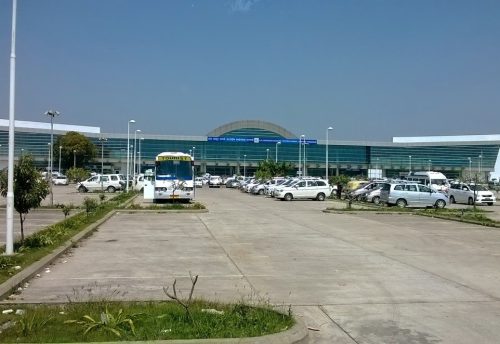
On arrivalWhether you land at Lal Bahadur Shastri Airport or come in by train to Varanasi Junction or Manduadih, head to your hotel first and drop your bags. This is a six-day trip, not a one-night dash, so there is no need to rush straight into sightseeing.
2. Kal Bhairav Temple
Late morningLocal custom has visitors seek Kal Bhairav's blessing — he is considered the guardian of the city — before the main temples. Published hours are roughly 5:00 AM–1:30 PM and 4:30–9:30 PM; darshan is free and 30–45 minutes is enough.
A car gets you to the edge of the lane; the last stretch to the shrine is on foot.
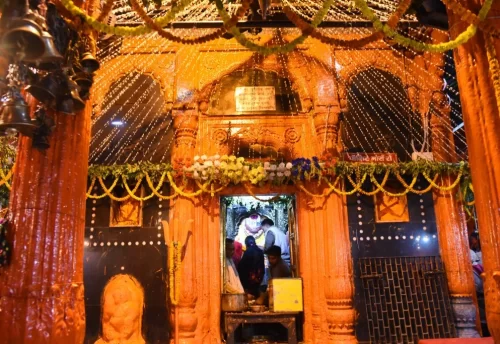
3. Kashi Vishwanath Temple
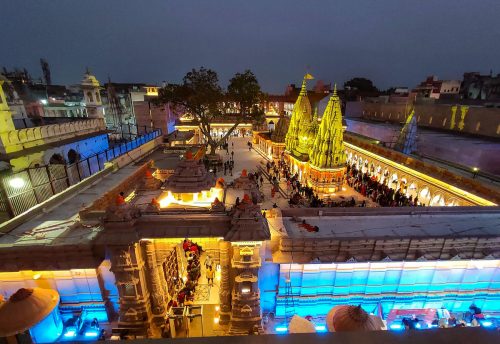
Late morningOne of the twelve Jyotirlinga shrines, and the reason most people come to this part of the old city. The present temple dates to 1780 and is reached through the Kashi Vishwanath Corridor, opened in December 2021. Phones and cameras are not allowed inside — leave them at the hotel or use a locker.
Budget 1.5–3 hours depending on the queue. Mondays and the month of Shravan are the busiest.
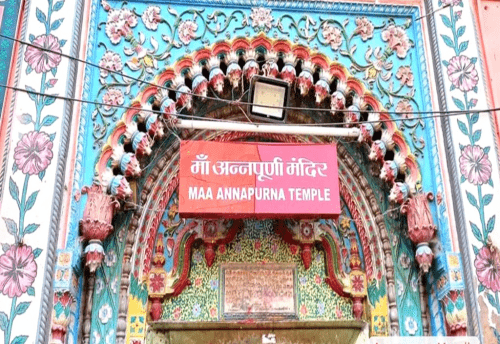
4. Annapurna Temple
MiddayA short walk from Kashi Vishwanath. Published hours run roughly 4:00–11:30 AM and 7:00–11:00 PM, so it closes for much of the afternoon — plan the order around whichever end of that window you arrive.
5. Rest, or a walk through Vishwanath Gali
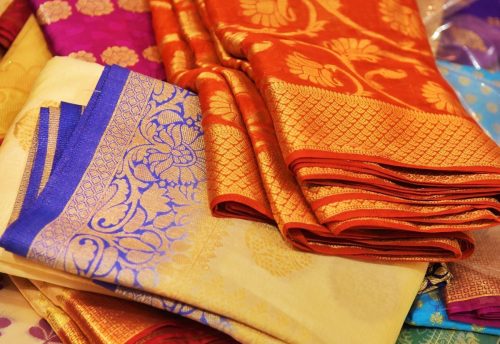
AfternoonThree temples on foot in old-city heat is enough for one stretch. Head back to the hotel, or use the break to browse Vishwanath Gali and the Godowlia market for Banarasi silk — there is no obligation to buy anything, and with six days ahead there is no need to cram everything into today.
6. A boat ride before the aarti
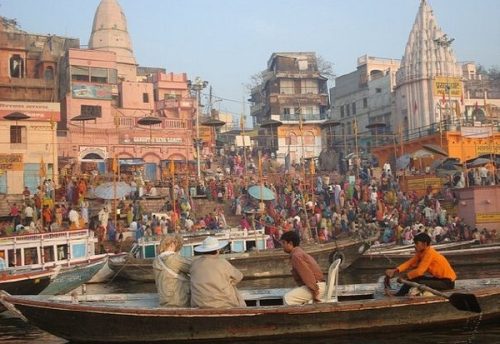
Evening, optionalNot essential, but worth the extra time if you have it. Boats leave from ghats such as Assi, Dashashwamedh, Namo and Kedar, and the aarti looks better from the water than from the crowded steps.
Agree the fare before boarding if you hire one on the spot, or book ahead through us.
7. Ganga Aarti at Dashashwamedh Ghat
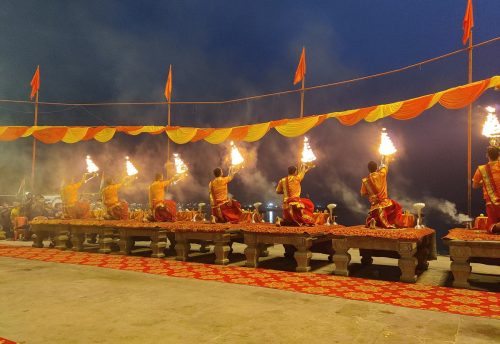
Around duskThe ritual begins around dusk — roughly 5:45–6:00 PM in winter, 6:45–7:00 PM in summer — and runs about 45 minutes.
Get to the ghat steps at least 45 minutes early if you want to sit rather than stand at the back.
8. Dinner and street food
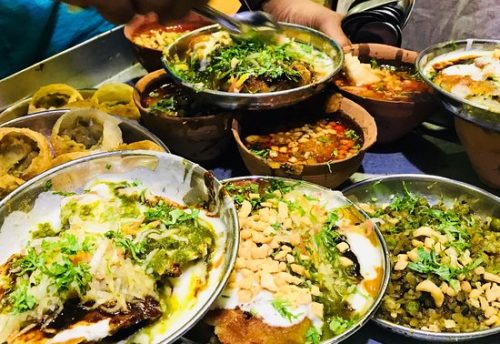
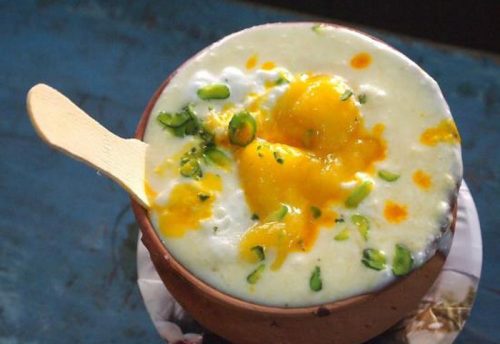
After the aartiTamatar chaat, kachori-sabzi and a glass of thick Banarasi lassi are worth seeking out near the old city. You have five more nights on the road ahead, so an early night after dinner sets up tomorrow's early start.
Night 1 of 5, in Varanasi. A hotel near the ghats or the Cantt area keeps tomorrow's early start short — our own budget hotel near Assi Ghat is one option.
Day 2 in Detail: Southern Temples, BHU & Sarnath
A second full day in Varanasi: three more temples before mid-morning, then breakfast, the university campus and Sarnath, with the evening left free.
1. Durga Temple
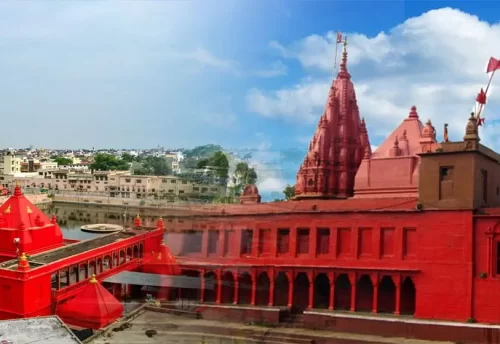
By 7 AMAlso called the Monkey Temple, for a reason — keep food out of sight. A red Nagara-style shrine from the 18th century beside Durga Kund; open 4:00 AM–1:00 PM and 3:00–9:00 PM, and 30 minutes is enough.
2. Tulsi Manas Mandir
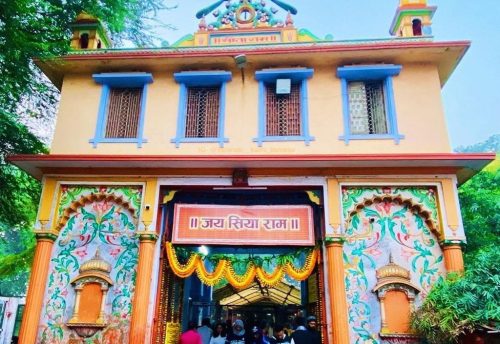
MorningA short walk from the Durga Temple, dedicated to Lord Rama and built where the saint Tulsidas is said to have written the Ramcharitmanas. Roughly 6:00 AM–8:00 PM in winter, 5:30 AM–9:00 PM in summer.
3. Sankat Mochan Hanuman Temple
MorningFounded, by tradition, by the poet-saint Tulsidas. No phones or cameras inside.
Busiest on Tuesdays and Saturdays — expect a longer queue on those days.
4. Banaras Hindu University & the New Vishwanath Temple
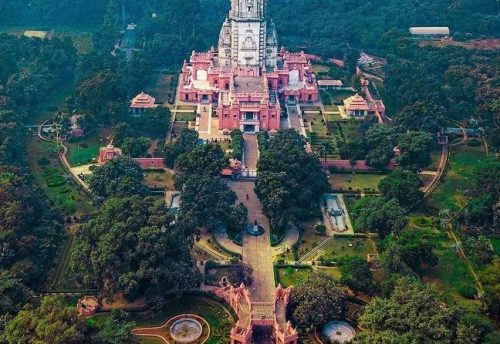
Late morningOne of Asia's largest residential university campuses — worth the drive-through alone. Stop at the New Vishwanath (Birla) Temple inside the campus, and add the Bharat Kala Bhavan museum if it happens to be open.
5. Breakfast, then the saree market
BreakfastHotel breakfast is the easy option, or look for kachori-sabzi and jalebi from a street stall, finished with a Banarasi paan. If you still want to shop for silk, this late-morning gap is a quieter time than yesterday afternoon.
6. Sarnath
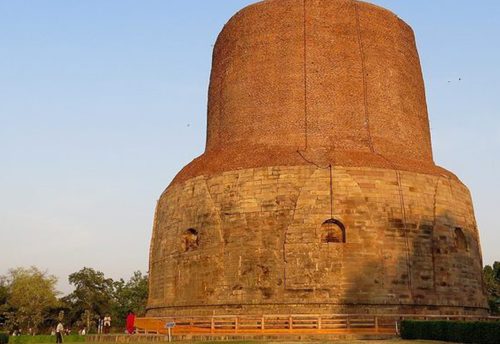
AfternoonAbout 10 km out, and where the Buddha is said to have given his first sermon. See the Dhamek Stupa, the Deer Park, the Chaukhandi Stupa and the Archaeological Museum if you have an extra half hour.
Give it 2–3 hours in total, including the drive.
7. Rest before tomorrow's drive
EveningKeep the evening light. Tomorrow starts the road-trip leg of this itinerary — Varanasi to Prayagraj — so pack your bags tonight rather than in the morning rush.
Night 2 of 5, in Varanasi. Your second and last night in the city before the drive to Prayagraj begins the four-city leg of this trip.
Day 3 in Detail: Varanasi to Prayagraj: the Triveni Sangam
Today the trip moves on from Varanasi. The drive to Prayagraj is about 130 km and takes roughly 2.5 to 3 hours, so you still have most of the day for sightseeing once you arrive. The Sangam is the reason most people come here, and the other stops — Anand Bhavan, Allahabad Fort and Khusro Bagh — sit within reach of it.
1. Drive from Varanasi to Prayagraj
MorningAfter breakfast and check-out, the road to Prayagraj is about 130 km and takes roughly 2.5 to 3 hours. Prayagraj was known as Allahabad until 2018, and it sits at the Triveni Sangam, where the Ganga and Yamuna meet the mythical, invisible Saraswati.
2. Lete Hanuman Mandir
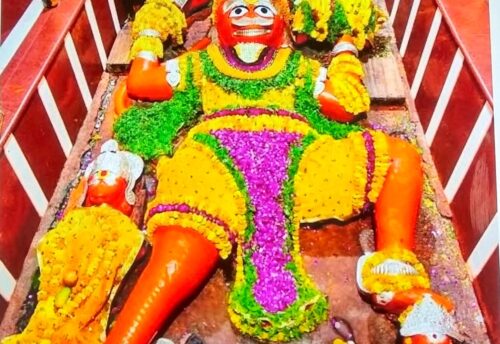
Late morningA unique temple near the Sangam with a large reclining Hanuman idol, said to be partly submerged when the Ganga rises each monsoon. It sits close to the river, so it fits naturally just before the boat ride.
3. Triveni Sangam: boat ride and a holy dip
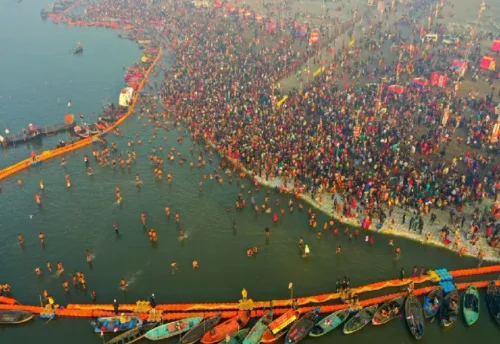
MiddayThe confluence of the Ganga, Yamuna and the mythical Saraswati, and the centrepiece of most Prayagraj visits. A boat ride out to the exact meeting point is the usual way to see it, arranged on the spot at the ghat or through us in advance.
Bring a change of clothes and a towel if you plan to bathe, and leave valuables at the hotel. If your dates fall near the Magh Mela or a Kumbh Mela, message us — the crowds and the plan both change.
4. Anand Bhavan
AfternoonThe Nehru family's ancestral home, now a museum on India's independence movement — a good stop if the freedom struggle interests you. Museum days and hours vary, so confirm locally before you go.
5. Allahabad Fort
AfternoonBuilt by Akbar in 1583 beside the Sangam. Much of it is under military use today, so public access is limited to parts such as the Ashoka Pillar, the Saraswati Koop and the Patalpuri Temple, plus the Akshaya Vat, a centuries-old banyan tree believed to be indestructible.
6. Khusro Bagh
If time allowsA walled Mughal-era garden with the tombs of Prince Khusrau and his mother — a calm, unhurried end to the day if the earlier stops have not run long.
Night 3 of 5, in Prayagraj. Check in and rest after a full day; tomorrow's drive to Ayodhya is roughly four hours. See our Prayagraj travel guide for more on the city.
Day 4 in Detail: Prayagraj to Ayodhya: Hanuman Garhi, Kanak Bhawan & the Saryu
This is the day this itinerary earns its extra night. You reach Ayodhya around the middle of the day, cover Hanuman Garhi and Kanak Bhawan in the afternoon, and close the day at Ram ki Paidi for the evening aarti on the Saryu. The Ram Mandir is deliberately left for tomorrow morning, so that visit is not squeezed in at the end of a travel day.
1. Drive from Prayagraj to Ayodhya, and check in
MorningAfter breakfast and check-out, allow roughly four hours on the road to Ayodhya, more if traffic is heavy. Ayodhya sits on the banks of the Saryu and is revered as the birthplace of Lord Rama. Check in, freshen up and rest before the afternoon.
2. Hanuman Garhi
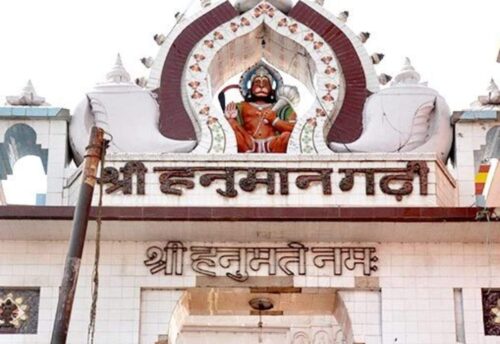
AfternoonA hilltop temple to Hanuman, traditionally visited before the Ram Mandir. A flight of steps leads up to it, so wear comfortable footwear — the climb rewards you with a wide view over the city.
Tuesdays and Saturdays, Hanuman's days, are usually busier.
3. Kanak Bhawan
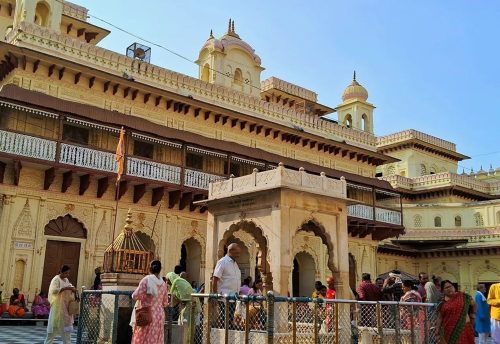
AfternoonDedicated to Rama and Sita, and believed to have been gifted to Sita by Kaikeyi. Known for its richly adorned idols and its quiet atmosphere. Dasharath Mahal, associated with King Dasharatha, is a short optional add-on nearby if the afternoon has room for it.
4. Ram ki Paidi and the Saryu aarti
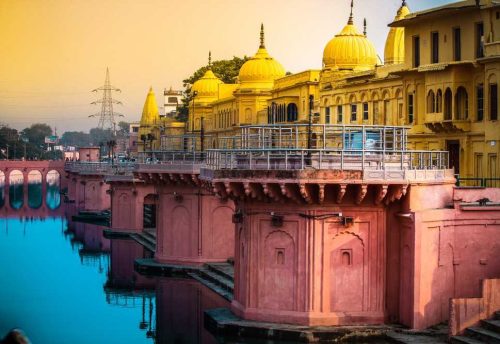
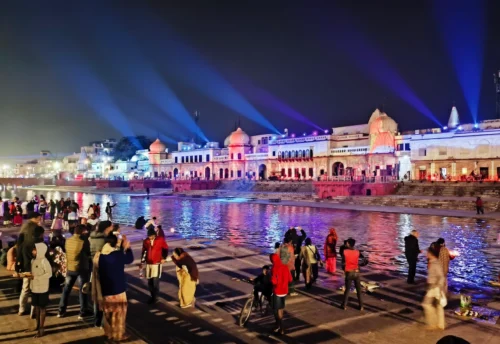
EveningA series of bathing ghats on the Saryu, popular for the evening aarti and a peaceful riverside walk. The aarti follows sunset, so the exact time shifts with the season.
Night 4 of 5, in Ayodhya. The Ram Mandir darshan is kept for an early, unhurried visit tomorrow morning — the main reason this six-day plan exists rather than the faster four-night version.
Day 5 in Detail: Ram Mandir Darshan, Then the Long Drive to Bodh Gaya
The morning belongs to the Ram Mandir, and because you are already in Ayodhya rather than arriving fresh off a drive, you can go early and take your time. After the darshan and check-out, the rest of the day is the road to Bodh Gaya — the longest single drive of this itinerary — so the plan for today is simple: temple first, then travel.
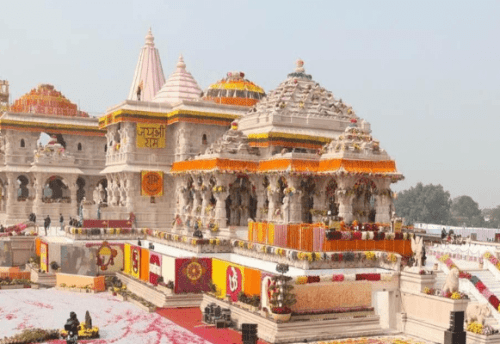
1. Ram Janmabhoomi Temple (Ram Mandir)
Early morningThe birthplace of Lord Rama and the centrepiece of this whole route, consecrated in January 2024. Security is strict — mobile phones, bags and similar items are generally not allowed inside, so travel light and wear modest clothing and easy footwear.
Entry arrangements such as darshan slots and passes are set by the temple trust and change; confirm the current rules for your date before you travel.
2. The drive to Bodh Gaya
After the darshanThis is the longest drive of the trip, in the state of Bihar. Plan for most of the remaining day in the vehicle, with a meal and a rest stop on the way, and expect to reach Bodh Gaya in the evening.
Because this version gives the drive its own day, you arrive without needing to sightsee on the same evening.
3. Check in and rest in Bodh Gaya
EveningCheck in, freshen up and have an early dinner. Tomorrow is a full day at the Mahabodhi Temple and the monasteries, with nothing else competing for the time.
Night 5 of 5, in Bodh Gaya. Bodh Gaya is one of Buddhism's four most important pilgrimage sites, alongside Lumbini, Sarnath and Kushinagar.
Day 6 in Detail: A Full Day in Bodh Gaya
The Mahabodhi Temple and Bodhi Tree in the morning, the Great Buddha Statue and the international monasteries after that, then your drop at Gaya.
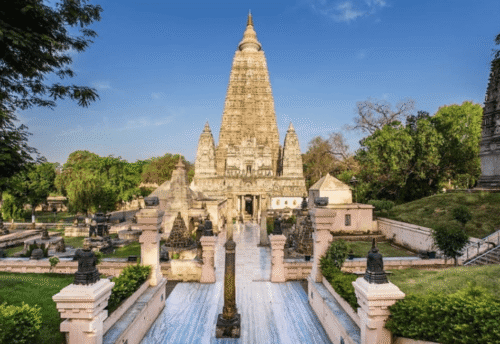
1. Mahabodhi Temple, Bodhi Tree & Vajrasana
MorningBodh Gaya is where Gautama Buddha is believed to have attained enlightenment while meditating under a Bodhi Tree. The Mahabodhi Temple, a UNESCO World Heritage Site, is built around a descendant of that original tree, and the Vajrasana — the "Diamond Throne" — marks the exact spot.
Modest clothing and a quiet manner are appropriate; rules on phones and cameras inside the complex can change, so check locally.
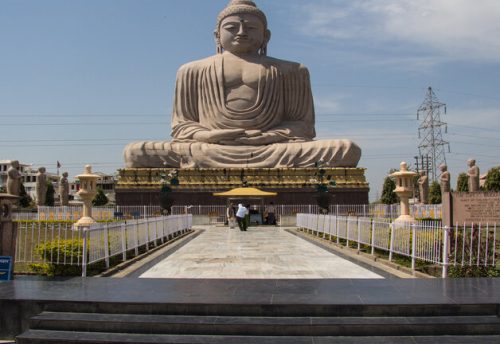
2. Great Buddha Statue
Late morningAn 80-foot statue of the Buddha in meditation, consecrated by the Dalai Lama in 1989 and surrounded by smaller statues — a quiet place to spend some time before the next stop.
3. Thai, Japanese, Tibetan & Chinese temples
MiddaySeveral countries have built their own monasteries around the Mahabodhi Temple in their native architectural styles: the golden-roofed Thai Monastery, the serene Japanese temple Indosan Nippon-ji, the Tibetan Monastery with its large prayer wheel, and a Chinese temple with a tranquil prayer hall. Each keeps its own hours, so you visit whichever are open on the day; the Archaeological Museum is worth adding if there is time left over.
Dress modestly, and remove footwear wherever you are asked to.
4. Drop at Gaya Airport or Gaya Junction
AfternoonThe drive to Gaya is short from Bodh Gaya. Build in buffer time for traffic, and this is where the six-day plan ends — unless you would rather return to Varanasi by road, in which case plan the extra driving day.
Trip ends with your drop at Gaya Airport or Gaya Junction.
Good to Know Before You Go
- Phones and cameras are not allowed inside Kashi Vishwanath, Sankat Mochan or the Ram Mandir — travel light on those visits.
- Dress modestly at every temple on this route: shoulders and knees covered, and shoes that are easy to slip off.
- Day 5 is a long drive. Ayodhya to Bodh Gaya is the longest single stretch of the trip — this six-day version gives it a full day rather than squeezing it around sightseeing.
- Ram Mandir entry rules change. Darshan slots and passes are set by the temple trust, so confirm the current rules for your date before you travel.
- The old-city lanes to Kal Bhairav, Annapurna and Kashi Vishwanath in Varanasi are walked, not driven — factor in the extra time.
- Distances are real: roughly 130 km Varanasi–Prayagraj, about 4 hours Prayagraj–Ayodhya, and the Ayodhya–Bodh Gaya leg is the longest of all.
- Timings here come from published visitor guides and shift on festival days — confirm locally if your dates fall near one.