
Bodh Gaya · Bihar · Temples of the Buddhist world
Bodh Gaya Monasteries Thai, Japanese, Tibetan & Chinese temples
Countries from across the Buddhist world have built their own monasteries around the Mahabodhi Temple. Here is what each one looks like, what to expect, and how to plan a visit to several in one outing.
The basics
What Are the Bodh Gaya Monasteries?
Around the Mahabodhi Temple, several countries with Buddhist populations have built their own monasteries and temples, each in its native architectural style. Walking between them gives a sense of how differently Buddhist tradition is expressed across Thailand, Japan, Tibet, China and beyond — all within walking or short auto-ride distance of one another.
This guide covers four of the best known: the Thai Monastery, the Japanese temple (Indosan Nippon-ji), the Tibetan Monastery and a Chinese temple. Each keeps its own hours and is generally free to enter, though some request a small donation.
Most visitors combine a few of these monasteries with the Mahabodhi Temple and the Great Buddha Statue in one day — see our full Bodh Gaya places-to-visit guide for a suggested route.
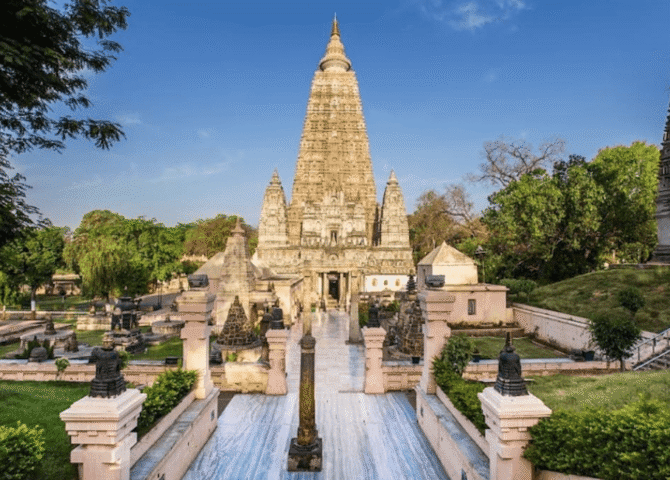
| What it is | A cluster of monasteries built by different Buddhist countries in their own styles |
|---|---|
| Location | Around the Mahabodhi Temple, Bodh Gaya |
| Thai Monastery | A golden-roofed temple built in traditional Thai style |
| Japanese temple | Indosan Nippon-ji, a serene Japanese-style temple |
| Tibetan Monastery | Home to a large prayer wheel and vividly painted murals |
| Chinese temple | A tranquil prayer hall in Chinese architectural style |
| Entry | Generally free; some monasteries welcome a small donation |
| Time to allow | Roughly 1.5 to 2 hours to see several |
What you will see
The Monasteries, One by One
Each keeps its own hours and character. We check which are open on your date before planning the route.
Thai Monastery
A golden-roofed temple built in traditional Thai architectural style — one of the most photographed monasteries in Bodh Gaya, with sweeping curved rooflines and gold detailing.
Japanese Temple (Indosan Nippon-ji)
A serene, minimalist Japanese-style temple, a contrast in tone to the more ornate monasteries nearby. Its calm grounds are a good spot to slow down.
Tibetan Monastery
Home to a large prayer wheel and vividly painted murals in the Tibetan Buddhist tradition — visitors often spin the prayer wheel clockwise as they pass.
Chinese Temple
A tranquil prayer hall built in Chinese architectural style, generally quieter than the more visited monasteries nearby.
On the day
What to Expect Visiting the Monasteries
Each monastery is a working place of worship, run independently by monks and staff from that country, rather than a single managed complex. That means opening hours, whether photography is allowed, and how strictly footwear or dress rules are enforced can all vary from one monastery to the next — and can change without much notice.
Most visitors walk or take a short auto ride between a handful of monasteries in a couple of hours, rather than trying to see every one. Ask locally, or check with us, on which monasteries are open and worth prioritising on your date.
Plan your visit
Monastery Visiting Hours
Each monastery sets its own hours, and most keep a midday closure. Treat this as a general guide.
| Session | Approximate time |
|---|---|
| Morning | Roughly 6:00 AM to 12:00 noon |
| Midday | Many monasteries close for a few hours |
| Afternoon | Roughly 2:00 PM to 6:00 PM |
These are general hours drawn from published sources — each monastery sets its own schedule, and we check which are open before we plan your route.
Etiquette
Rules, Dress & Etiquette
What to wear
Modest clothing covering shoulders and knees — appropriate at every monastery on this route.
Footwear
Remove your shoes where you are asked to — signposted at most entrances.
Photography
Varies by monastery. Ask before photographing prayer halls, murals or monks.
Quiet conduct
These are active places of worship, not tourist attractions first — keep noise down and be mindful of anyone praying or meditating.
Prayer wheels
Where present, such as at the Tibetan Monastery, spin them clockwise, following the direction others use.
Donations
Not required, but a small donation is appreciated at monasteries that maintain a donation box.
Getting there
How to Reach the Monasteries
The monasteries are spread around the Mahabodhi Temple, within easy reach of central Bodh Gaya.
-
Step 1
By air
Gaya Airport is a few kilometres from central Bodh Gaya, with connections that are largely seasonal or pilgrimage-circuit flights.
-
Step 2
By train
Gaya Junction is well connected on the Indian rail network, with a short onward drive or auto ride into Bodh Gaya.
-
Step 3
From Varanasi
Bodh Gaya is roughly 250 km from Varanasi, about 5 to 6 hours by road. See our Divya Dham tour package or Varanasi Bodh Gaya itinerary guide for the full route.
-
Step 4
Getting around locally
The monasteries are spread over a walkable area around the Mahabodhi Temple; a short auto ride covers the wider ones easily.
Local advice
Tips for a Smooth Visit
- Pick a few, not all. Trying to see every monastery in one visit is tiring — the Thai Monastery and the Tibetan Monastery are usually the two most visited if you are short on time.
- Go late morning. Most monasteries are open by then, after any early-morning prayers, and before the midday closure some observe.
- Combine it with the temple. Most visitors walk the monasteries alongside the Mahabodhi Temple and the Great Buddha Statue in the same day.
- Carry small change. Useful if you would like to leave a donation at any of the monasteries.
- Ask before photographing. Rules vary by monastery, and it is respectful to check, especially inside prayer halls.
Plan a route
Places to Visit Near Bodh Gaya Monasteries
Combine these in one outing — each has its own visitor guide.
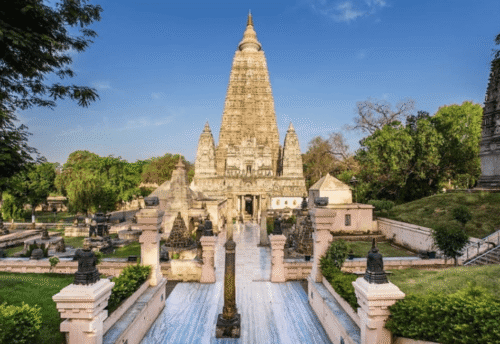
Mahabodhi Temple, Bodh Gaya
The UNESCO-listed temple built around the Bodhi Tree, marking the spot of the Buddha’s enlightenment.
Read the guide →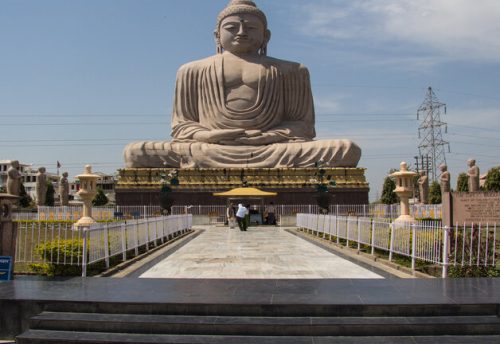
Great Buddha Statue, Bodh Gaya
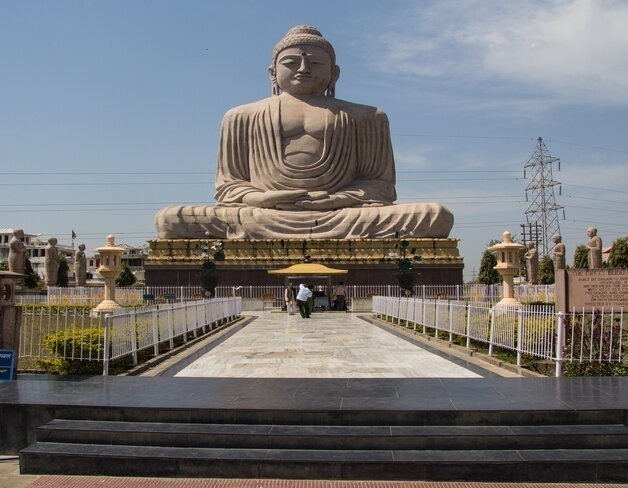
An 80-foot statue of the Buddha in meditation, consecrated by the Dalai Lama in 1989.
Read the guide →In pictures
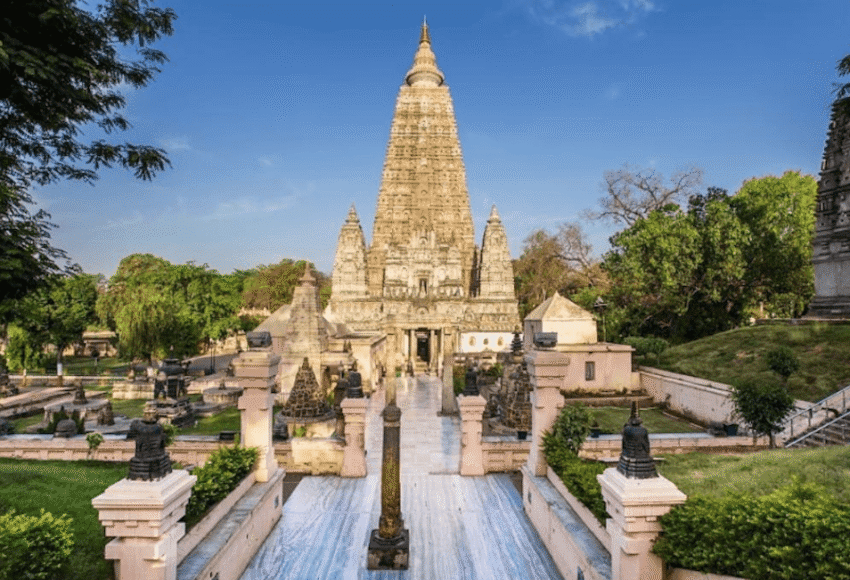
Bodh Gaya Monasteries: Photo Gallery

Quick answers
Bodh Gaya Monasteries: Frequently Asked Questions
Several, including Thailand, Japan, Tibet and China, each in their own architectural style, clustered around the Mahabodhi Temple. This guide covers those four.
Timings, rules and fees can change with the season and on festival days. Please confirm on the day, especially for darshan and aarti times.
Plan your visit
Make the Most of Your Bodh Gaya Trip
Bodh Gaya Travel Guide
Best time to visit, how to reach, and everything else to plan your trip.
Learn more →Varanasi + Bodh Gaya Tour Packages
Let our local team plan the whole trip, with pick-up and a private vehicle.
Learn more →Varanasi Cab Service
Book a private vehicle for the road trip from Varanasi.
Learn more →More Places to Visit in Bodh Gaya
Planning a Trip to Bodh Gaya?
Message us for real local advice on timings, routes and where to stay — from a Varanasi-based team that runs this route often.