
Varanasi · Cremation ghat · King Harishchandra
Harishchandra Ghat, Varanasi The Legend of Truth, History & Visitor Guide
Harishchandra Ghat is one of the two main cremation ghats of Varanasi, named after the legendary king who upheld truth even when it cost him his kingdom. This guide explains the legend, the history and how to visit respectfully.
The basics
What Is Harishchandra Ghat?
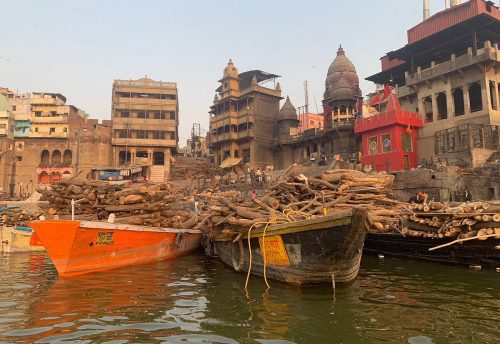
Harishchandra Ghat is one of the two cremation ghats of Varanasi, alongside Manikarnika Ghat. It is also known as Adi Manikarnika — the “original” cremation ground — and Hindus come here from far away to cremate their dead, in the belief that the soul will attain moksha.
The ghat is named after King Harishchandra, a mythical king celebrated for his devotion to truth. According to the legend, he worked at the cremation ground in Kashi to keep his word, and the gods, impressed by his steadfastness, restored his lost kingdom and his dead son.
Like Manikarnika, it is a place of mourning. A visit here is about observing quietly and respectfully.
| Role | One of the two main cremation ghats of Varanasi |
|---|---|
| Also known as | Adi Manikarnika (“the original cremation ground”) |
| Named for | King Harishchandra of legend |
| In use since | At least the 15th–16th centuries, according to sati monuments found in the area |
| Renovated | About 1741, by Narayana Dikshita, a religious guru of the Peshwas, who made it partly pucca |
| Electric crematorium | Opened in 1988; wood-fire cremations continue alongside it |
| Photography | Photographing cremations is inappropriate and strongly discouraged |
| Best way to see it | From a boat at a respectful distance, or with a local guide |
A king who never lied
The Legend of King Harishchandra
Harishchandra is remembered as the king who never told a lie. In the best-known telling, the sage Vishwamitra tests him: he gives up his kingdom, is parted from his wife and son, and ends up in service at the cremation ground in Kashi.
Even when his own son died, the story goes, Harishchandra held to his duty at the ghat. The gods, moved by his honesty, restored his kingdom and brought his son back to life. That is why the ghat carries his name, and why it stands for truth and duty in the Hindu tradition.
Versions of the story differ across regions and texts.
The oldest cremation ground
History of Harishchandra Ghat
Sati monuments found in the area suggest that cremations have taken place at this ghat since at least the 15th–16th centuries, which is why it is called the original cremation ground, Adi Manikarnika.
- 1741
Narayana Dikshita, a religious guru of the Peshwas, renovated the ghat and made it partly pucca.
- 1988
An electric crematorium was opened, although traditional wood-fire cremations continue alongside it.
Etiquette
How to Visit Respectfully
Do not photograph
Cremations, pyres and mourners are never a subject for photographs or video. Keep phones and cameras away.
Stay quiet and modest
Wear covered clothing, keep your voice low and do not crowd the families.
See it from the river
A boat gives a view from a respectful distance and avoids the narrow lanes.
Refuse unofficial requests
Politely decline anyone who asks you for money for firewood or a “ceremony”.
Ask before you approach
If you want to understand what you are seeing, ask a trusted guide rather than staff or mourners.
Remember it is a working ghat
Cremations continue day and night. The families there are grieving.
If you are unsure whether it is appropriate to step closer, do not.
Getting there
How to Reach Harishchandra Ghat
| By | How |
|---|---|
| Location | On the ghats of the old city, in the southern half of the ghat stretch, south of Dashashwamedh Ghat and Manikarnika. |
| By boat | Boat rides along the ghats pass it, and a boat is the most respectful way to see it. See Ganga boat rides. |
| On foot | The ghat is reached through narrow lanes, so a local guide or your driver’s directions are useful. |
Plan a route
Places to Visit Near Harishchandra Ghat
Combine these in one outing — each has its own visitor guide.
Quick answers
Harishchandra Ghat: Frequently Asked Questions
Harishchandra Ghat is one of the two main cremation ghats of Varanasi, along with Manikarnika Ghat. It is also called Adi Manikarnika, meaning the original cremation ground.
Timings, rules and fees at temples and ghats can change with the season and on festival days. Details on this page were last checked in September 2026 — please confirm on the day, especially for aarti and darshan times.
Plan your visit
Make the Most of Your Varanasi Trip
Ganga Boat Ride
See the ghats and the aarti from the river — book a boat ride with our local team.
Learn more →Stay Near the Ghats
A budget AC hotel in Shivala, close to Assi Ghat, run by the same team.
Learn more →Dev Diwali 2026 Guide
Visiting on Kartik Purnima? Dates, timings and how to watch the ghats light up.
Learn more →Varanasi Tour Packages
Let us plan temples, ghats and aarti into one easy itinerary.
Learn more →More Places to Visit in Varanasi
Temples, ghats and the Ganga Aarti — see the full guide to places to visit in Varanasi.
Planning a Trip to Varanasi?
Message us for real local advice on timings, routes and where to stay — from a team based in the city.