Skip to content
Best Varanasi Tour Planner — Kashi Yatra

Travel Guide · History & Heritage

Varanasi 2 Nights 3 Days Heritage Itinerary for Foreign Tourists

Three days through the layers of Varanasi's history: a Buddhist site older than 2,000 years, Maratha-era ghats, a royal fort, an 18th-century observatory and a silk craft that is still woven by hand.

  • 3days
  • 2nights
  • 13sights
  • 6eras

Before you start

Varanasi 2 Nights 3 Days Heritage Itinerary: Overview

In short

A 3-day Varanasi heritage itinerary: Day 1 the Jantar Mantar observatory, a boat along the ghats and the Ganga Aarti. Day 2 Sarnath's Buddhist ruins and museum, then a silk workshop and the Bharat Mata Temple. Day 3 the Assi Ghat dawn Aarti, the old city, BHU's museum and Ramnagar Fort.

Varanasi is one of the world's oldest living cities, and its history sits in layers. In three days you can stand where the Buddha first taught, pass 18th-century palace ghats from a boat, see a 1737 observatory and a royal fort, and watch silk woven by hand.

This is a plan, not a fixed tour

We customise everything to your schedule: your arrival and departure times, how fast you like to travel, and what you most want to see. Send us your dates and we will reshape the days around them.

Check your arrival day

  • Mon
  • Tue
  • Wed
  • Thu
  • FriSarnath Museum closed
  • Sat
  • SunBharat Kala Bhavan closed

Day 2 is Sarnath and Day 3 is BHU. If Day 2 lands on a Friday, or Day 3 on a Sunday, swap Day 2 and Day 3.

Layers of time

A Timeline of the Places You Will Visit

Each stop on this itinerary belongs to a different chapter. The colour of the label on each stop below matches its chapter here.

  1. c. 5th century BCE Ancient

    The Buddha at Sarnath

    The Buddha gives his first teaching in the Deer Park at Sarnath, about 10 km from the old city. Day 2.

  2. 3rd century BCE to c. 500 CE Ancient

    Ashoka to the Guptas

    Emperor Ashoka raises a pillar and stupa at Sarnath. Centuries later the Gupta-era Dhamek Stupa takes its present form. Day 2.

  3. 1500s Mughal

    Humayun's tower, Tulsidas's Kashi

    In 1588 an octagonal tower is added to Chaukhandi Stupa to mark Emperor Humayun's visit. The poet Tulsidas writes the Ramcharitmanas in Varanasi the same century. Days 1 and 2.

  4. 1700s Maratha

    Ghats, observatory and fort

    Most of the riverfront is rebuilt with Maratha and royal patronage. Jai Singh II builds the observatory in 1737, and the Maharaja of Banaras builds Ramnagar Fort. Days 1 to 3.

  5. 1900s Modern

    University, museum, map

    Banaras Hindu University opens in 1916, Bharat Kala Bhavan in 1920, and Gandhi inaugurates the Bharat Mata Temple in 1936. Days 2 and 3.

Day by day

Varanasi Heritage Itinerary: Day-by-Day Plan

Prefer to read it all as text? Jump to the full written itinerary.

Day 1: Arrival, the Old Observatory and the River

Settle in, then spend a light first day on an 18th-century observatory, the ghats from a boat, and the evening Ganga Aarti.

  1. Check in
  2. Lunch
  3. Jantar Mantar
  4. Boat ride
  5. Ganga Aarti
  1. On arrival

    Check in and get your bearings

    However you arrive, a flight into Lal Bahadur Shastri International Airport or a train into Varanasi Junction or Manduadih, head straight to your hotel and drop your bags. Give yourself an hour to rest before the first stop.

    Need a pick-up? See our airport cab service
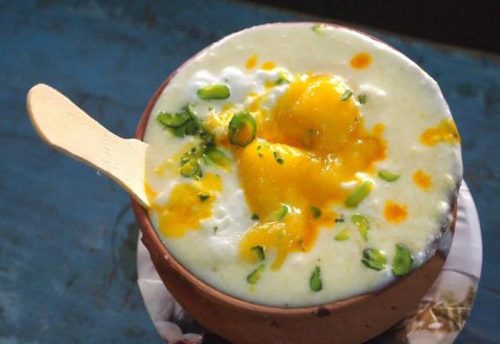
  2. A clay cup of the famous Varanasi lassi Lunch
    Living

    Banarasi food as living heritage

    Kachori, jalebi and a clay-cup lassi: food is heritage too.

    • Kachori with potato curry
    • Hot jalebi
    • Thick clay-cup lassi
    • About 1 hour
    • Mostly vegetarian
    • Bottled water only
    Read the story

    Eat where the old city eats: kachori with spiced potato curry, jalebi, a thick clay-cup lassi. Street food here is part of the city's long trading history, and most of it is vegetarian. If your stomach is not used to Indian street food, choose busy stalls with hot, freshly made food, and drink only bottled or filtered water.

  3. Afternoon
    Royal

    Man Mandir Ghat and the Jantar Mantar observatory

    A stone observatory from 1737, on the roof of a palace.

    • Giant stone sundial
    • Stepped and circular instruments
    • Man Mahal palace
    • About 45 minutes
    • Open air: avoid harsh sun
    • Small ticket at the gate
    Read the story

    Walk up to Man Mahal, the palace above Man Mandir Ghat. On its roof is an open-air observatory built in 1737 by Maharaja Jai Singh II of Jaipur, who built five such observatories in India (Delhi, Jaipur, Ujjain, Mathura and Varanasi). The stone instruments, including a giant sundial, were built to track the sun, moon and stars. Look for the large stepped instrument and the circular bowls. Visiting hours and the small ticket are set at the gate; the instruments are in the open, so go before the late-afternoon light fades.

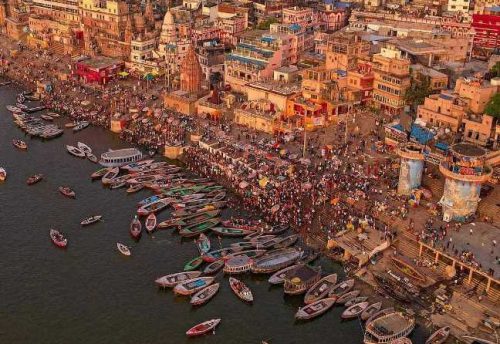
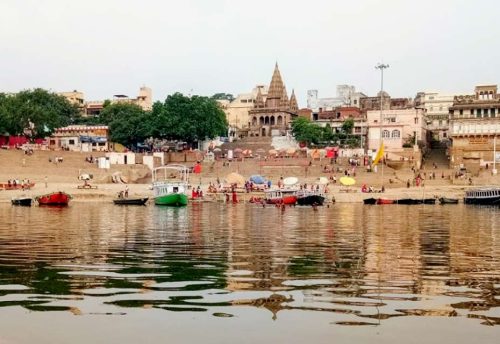
  4. Aerial view of the ghats and boats along the Ganga at Varanasi Late afternoon
    Maratha

    A boat along the ghats

    Read 300 years of palaces and steps from the water.

    • Tulsi, Dashashwamedh, Man Mandir
    • Manikarnika Ghat
    • Alamgir Mosque at Panchganga
    • 1.5 to 2 hours
    • Best in golden light
    • No photos at Manikarnika
    Read the story

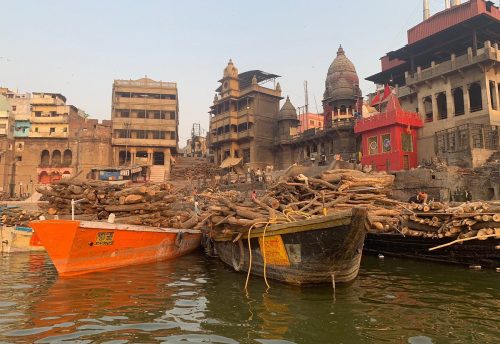
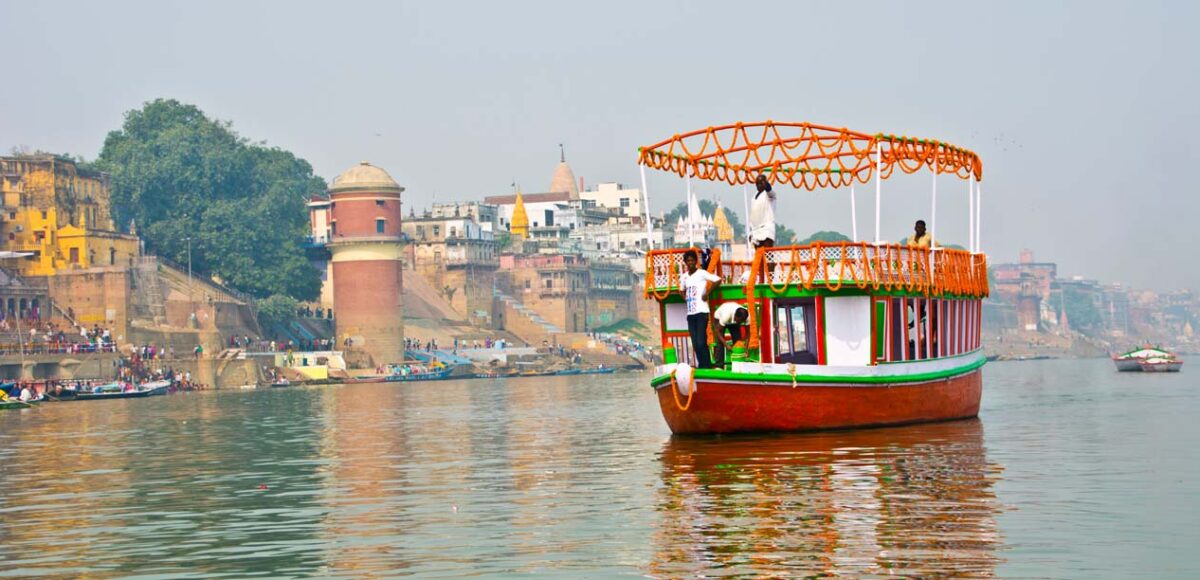
    The old city looks its best from the river, and this ride tells its history in order. Most of the ghats you pass were rebuilt in the 18th century with the patronage of Maratha and other royal families, so the palaces and steps are around 250 to 300 years old, even though the city itself is far older. Going north from Assi you pass Tulsi Ghat, named for the poet Tulsidas, then Dashashwamedh, the main ghat, and Man Mandir Ghat with the observatory on its roof. Further on come Manikarnika, Scindia Ghat and Panchganga, where the Mughal-era Alamgir Mosque stands above the steps. Plan 1.5 to 2 hours, timed to finish near Dashashwamedh before the Aarti. Manikarnika is the main cremation ghat: it is a place of mourning, so please do not photograph the cremations.

    See our boat booking
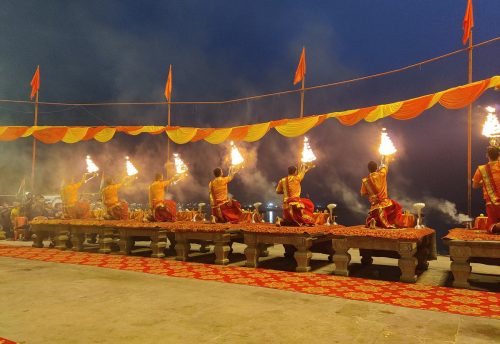
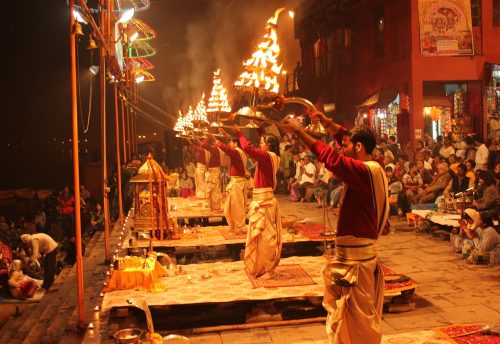
  5. Priests performing the Ganga Aarti on the Varanasi ghats at dusk Evening
    Living

    The Ganga Aarti at Dashashwamedh Ghat

    Lamps, conch shells and chanting on the ghat steps.

    • Rows of brass lamps
    • Chanting and conch shells
    • Watch from the steps or a boat
    • About 45 minutes
    • Arrive 45 minutes early
    Read the story

    End the day at the river with the Ganga Aarti, a ceremony of lamps, conch shells and chanting performed on the steps of Dashashwamedh Ghat every evening. It is a religious ritual, and also a performance tradition that has been practised here for generations. Arrive at least 45 minutes early for a place on the steps, or watch from a boat for a wider view.

    Read the Ganga Aarti guide

Night 1: a hotel within 10 to 15 minutes of the old city or near Assi Ghat keeps the three days short. Our own hotel near Assi Ghat is one option.

Day 2: Buddhist Sarnath and Royal Banaras

Go back to the 3rd century BCE at Sarnath in the morning, then spend the afternoon on Banaras's hand-woven silk and the marble map at the Bharat Mata Temple.

  1. Sarnath
  2. Museum
  3. Chaukhandi
  4. Lunch
  5. Silk
  6. Bharat Mata
  7. Evening off
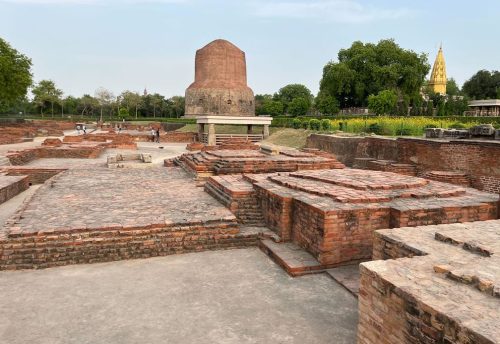
  1. The Dhamek Stupa rising above the brick ruins at Sarnath Morning (leave by 8:00)
    Ancient

    Sarnath: the Dhamek Stupa and the ruins

    Where the Buddha first taught, over 2,500 years ago.

    • Dhamek Stupa, about 43 m tall
    • Monastery ruins
    • Base of Ashoka's pillar
    • About 1.5 hours
    • Higher ticket for foreign visitors
    • Go early: cooler and quiet
    Read the story

    Sarnath is about 10 km from the city and is where the Buddha gave his first teaching to five companions, around the 5th century BCE. Start at the main archaeological site. The Dhamek Stupa, about 43 metres tall, was built in its present form in the Gupta period and stands over an older structure. Around it are the brick foundations of monasteries that stood here for centuries, and the base of the pillar that Emperor Ashoka raised in the 3rd century BCE. The site declined after the 12th century and was brought to light by excavations from the 19th century onward. Visitors from abroad pay a higher ticket than Indian visitors; pay at the counter and keep the ticket for the museum if it is a combined one. Start early: the stone is cool in the morning and the site is quiet.

    Read our Sarnath guide
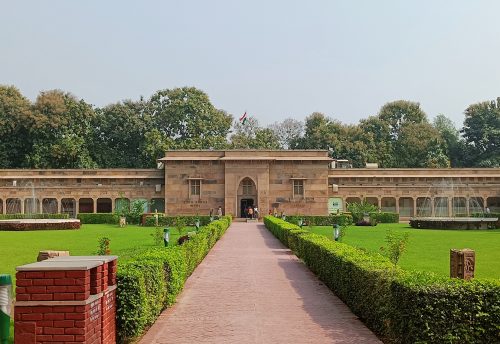
  2. The sandstone building of the Archaeological Museum at Sarnath Mid-morning
    Ancient

    The Sarnath Archaeological Museum and the Lion Capital

    India's national emblem, up close.

    • Lion Capital of Ashoka
    • Gupta-era seated Buddha
    • Sculptures and inscriptions
    • About 45 minutes
    • Closed on Fridays
    • Photos restricted inside
    Read the story

    The small museum beside the site holds some of the most important objects found here. The best known is the Lion Capital of Ashoka: four lions standing back to back, which once topped Ashoka's pillar and is now India's national emblem. Look also for the Gupta-period seated Buddha in the teaching pose, and for sculptures and inscriptions from the 3rd century BCE onwards. The museum is closed on Fridays. Photography inside the galleries is restricted, so ask at the counter.

    More on Sarnath
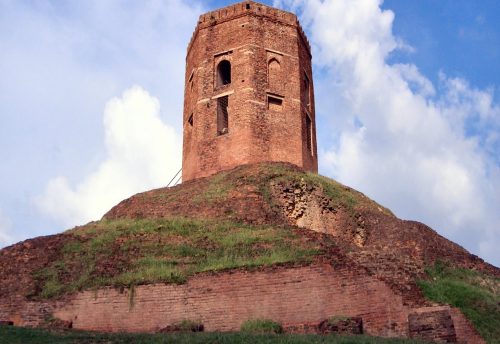
  3. The Chaukhandi Stupa at Sarnath with its octagonal brick tower Late morning
    Mughal

    Chaukhandi Stupa, Mulagandha Kuti Vihar and the Deer Park

    A Buddhist mound topped by a Mughal tower.

    • Octagonal tower of 1588
    • Temple murals (1931)
    • Green Deer Park
    • About 1 hour
    • Short walk between sites
    Read the story

    Walk or drive a short way to the Chaukhandi Stupa, a large brick mound that marks the place where the Buddha is said to have met his five former companions. The octagonal tower on top is a later, Mughal-era addition built in 1588 to commemorate Emperor Humayun's visit in 1532. Then see the Mulagandha Kuti Vihar, a modern Buddhist temple completed in 1931, with wall paintings of the Buddha's life by the Japanese artist Kosetsu Nosu, and the green Deer Park beside it.

  4. Midday

    Lunch and a pause in the city

    Drive back to the city for lunch and a rest. This is the natural break in the day, and a good time to stop at the hotel if you are staying nearby.

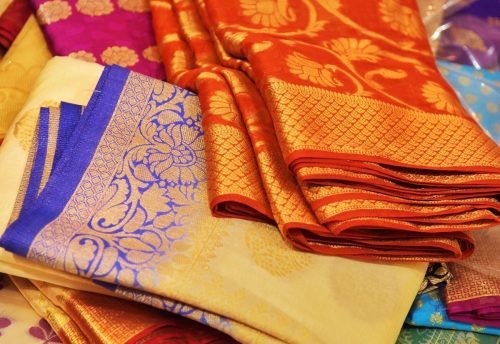
  5. Folded Banarasi silk saris woven with gold thread Afternoon
    Living

    A Banarasi silk workshop

    Watch gold-thread brocade woven on a loom.

    • A working loom
    • Gold and silver zari thread
    • Mughal-influenced motifs
    • 45 to 60 minutes
    • No need to buy
    • Agree any price first
    Read the story

    Banarasi brocade is silk woven with gold and silver thread, and the craft has been practised in Varanasi for centuries. Many of its motifs still show the influence of designs from the Mughal period. A short visit to a weaving workshop lets you watch a loom at work and see how long a single piece takes to make. There is no need to buy anything. If you do, agree the price before you accept any piece.

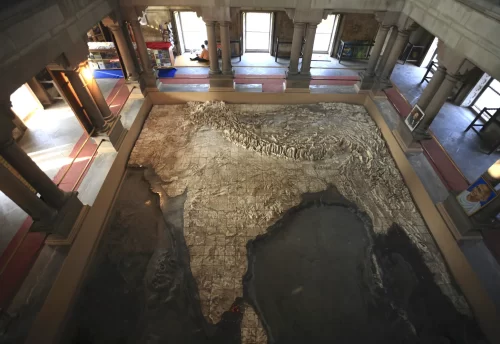
  6. The Bharat Mata Temple at Mahatma Gandhi Kashi Vidyapith in Varanasi Late afternoon
    Modern

    Bharat Mata Temple

    A temple with no idol, only a marble map of India.

    • Marble relief map
    • Opened by Gandhi in 1936
    • A quiet 30-minute stop
    • About 30 minutes
    • Check opening hours
    Read the story

    Visit the Bharat Mata Temple at Mahatma Gandhi Kashi Vidyapith. It has no idol: instead, a large marble relief map of undivided India lies on the floor. It was built by Babu Shiv Prasad Gupta and inaugurated by Mahatma Gandhi in 1936. Half an hour is enough.

  7. Evening

    A free evening and an early night

    The evening is left open for dinner at a café near the hotel or a rest. Try for an early night: Day 3 starts at dawn at the river.

Night 2: same hotel, so there is no repacking before the last day.

Day 3: Morning Aarti, the Old City and Royal Ramnagar

Start at Assi Ghat for the morning Aarti, then walk the old-city lanes, visit a historic university museum and the royal fort at Ramnagar, and leave for your flight or train.

  1. Dawn Aarti
  2. Old city
  3. BHU
  4. Ramnagar Fort
  5. Departure
  1. Visitors on the steps of Assi Ghat at sunrise for the morning Aarti Dawn (about 5:30)
    Living

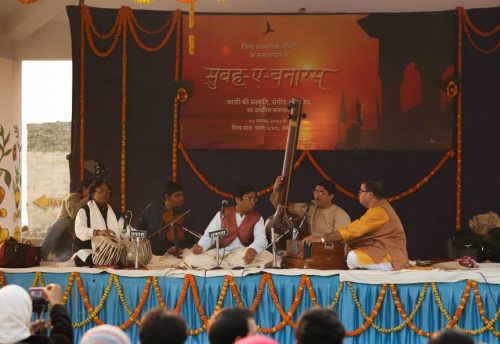
    The morning Aarti at Assi Ghat

    Sunrise chanting and Aarti, mostly with locals.

    • Vedic chanting
    • Aarti at sunrise
    • Soft light on the river
    • About 1 hour
    • Follows sunrise
    • Warm layer in winter

    Wear something warm in winter, since it is cold on the water at dawn. Confirm the start time with us the day before.

    Read the story

    Begin the day where the ghats begin. Assi Ghat, at the southern end of the riverfront, holds a morning ceremony at sunrise, known as Subah-e-Banaras, with Vedic chanting and the Ganga Aarti. After the evening Aarti on Day 1, it shows the other side of the river's daily life: quieter, softer light, and mostly locals. The ceremony follows sunrise, so the time shifts through the year.

    Read the Assi Ghat guide
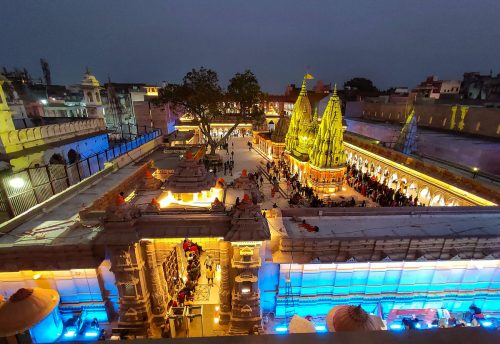
  2. Kashi Vishwanath Temple and its corridor lit up at night, Varanasi Morning
    Maratha

    The old-city lanes and the Kashi Vishwanath Corridor

    Narrow lanes, a temple of 1780 and a new Corridor.

    • Kashi Vishwanath Corridor (2021)
    • Hot kachori breakfast
    • Tall old houses, corner shrines
    • 1.5 to 2 hours
    • On foot only
    • Non-Hindu entry: ask us first

    Entry to the main temple for visitors who are not Hindu is decided by the temple trust and at the gate, and the rule has been applied strictly at times. Ask us before your visit if this matters to you. The New Vishwanath Temple on the BHU campus, next on this plan, is open to visitors of all faiths.

    Read the story

    Walk through the narrow lanes towards Kashi Vishwanath, one of the city's most important temples, and have a breakfast of hot kachori on the way; the old city is still quiet at this hour. The temple in its present form dates to 1780, and the wide Corridor that now leads to it from the river was opened in December 2021. Even if you do not go inside, the walk shows how the old city is built: tall houses, shrines on corners and shops that have sold the same goods for generations.

    Read the Kashi Vishwanath guide
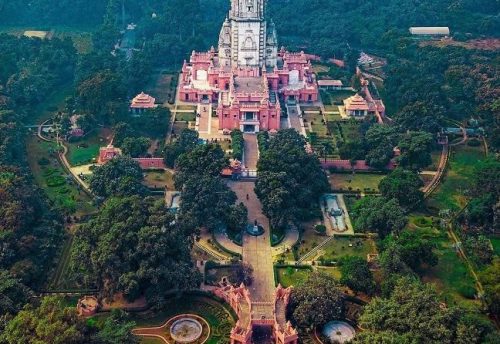
  3. Aerial view of the New Vishwanath Temple on the Banaras Hindu University campus Late morning
    Modern

    Banaras Hindu University and Bharat Kala Bhavan

    A campus founded in 1916 and a museum of Indian art.

    • Bharat Kala Bhavan (1920)
    • Miniatures and sculpture
    • New Vishwanath Temple, open to all
    • 2 to 2.5 hours
    • Closed on Sundays
    Read the story

    Banaras Hindu University was founded in 1916 by Madan Mohan Malaviya and is one of India's best-known universities, set on a large, leafy campus. Its museum, Bharat Kala Bhavan, was founded in 1920 and is the main reason to come: it holds Indian miniature paintings, sculpture, textiles and coins. Allow about an hour and a half for the museum, then see the New Vishwanath Temple in the middle of the campus, which is open to all visitors. Bharat Kala Bhavan is closed on Sundays and university holidays, and its hours change with the season, so we check them before you go.

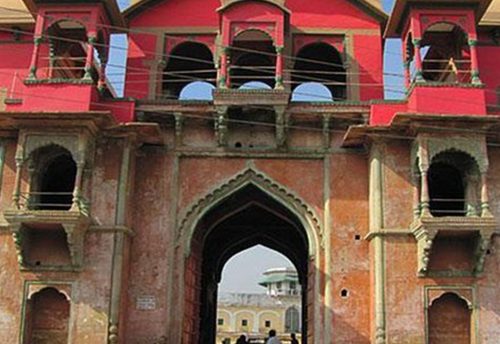
  4. The arched gateway of Ramnagar Fort with cannon wheels in the foreground Afternoon
    Royal

    Ramnagar Fort and its museum

    The 18th-century fort of the Maharaja of Banaras.

    • Durbar Hall
    • Vintage cars, costumes, weapons
    • River view from sandstone balconies
    • About 1.5 hours
    • Higher ticket for foreign visitors
    • 14 km from Kashi Vishwanath
    Read the story

    Cross to the east bank of the Ganga to Ramnagar Fort, the 18th-century seat of the Maharaja of Banaras, built in sandstone with carved balconies and a view back across the river. Inside are the Durbar Hall and a museum of royal belongings, with vintage cars, costumes, weapons and clocks. Ramnagar is also known for its Ramlila, a month-long staged retelling of the Ramayana held each autumn around the fort; UNESCO lists the Ramlila tradition as intangible cultural heritage. The fort is about 14 km from Kashi Vishwanath. The museum keeps its own hours and charges foreign visitors a higher ticket, so we check both before you go.

    Read about Ramnagar Fort
  5. Departure

    Head to the airport or station

    Fit the day around your departure time and leave generous time for the road to the airport or station. For an international connection, allow extra time.

    See our airport cab service

For a careful read

Read the Full Varanasi Heritage Itinerary

Prefer to read it start to finish rather than scan the cards above? Here is the same plan as plain text.

Open the written itinerary

This is the written version of the heritage itinerary, for anyone who would rather read every stop in order than scan the day cards. Each stop notes the period it comes from.

It is a plan, not a fixed tour. We customise everything to your schedule, so treat the order and timings below as a starting point.


Day 1 in Detail: Arrival, the Old Observatory and the River

Day 1 is kept light on purpose, since most visitors arrive tired. Everything is close to the river, and the boat ride gives you the key to the rest of the trip: once you have seen the ghats from the water, the places you visit on the next two days make more sense.

1. Check in and get your bearings

On arrival

However you arrive, a flight into Lal Bahadur Shastri International Airport or a train into Varanasi Junction or Manduadih, head straight to your hotel and drop your bags. Give yourself an hour to rest before the first stop.

2. Banarasi food as living heritage

Lunch

Eat where the old city eats: kachori with spiced potato curry, jalebi, a thick clay-cup lassi. Street food here is part of the city's long trading history, and most of it is vegetarian. If your stomach is not used to Indian street food, choose busy stalls with hot, freshly made food, and drink only bottled or filtered water.

3. Man Mandir Ghat and the Jantar Mantar observatory

Afternoon

Walk up to Man Mahal, the palace above Man Mandir Ghat. On its roof is an open-air observatory built in 1737 by Maharaja Jai Singh II of Jaipur, who built five such observatories in India (Delhi, Jaipur, Ujjain, Mathura and Varanasi). The stone instruments, including a giant sundial, were built to track the sun, moon and stars. Look for the large stepped instrument and the circular bowls. Visiting hours and the small ticket are set at the gate; the instruments are in the open, so go before the late-afternoon light fades.

4. A boat along the ghats

Late afternoon

The old city looks its best from the river, and this ride tells its history in order. Most of the ghats you pass were rebuilt in the 18th century with the patronage of Maratha and other royal families, so the palaces and steps are around 250 to 300 years old, even though the city itself is far older. Going north from Assi you pass Tulsi Ghat, named for the poet Tulsidas, then Dashashwamedh, the main ghat, and Man Mandir Ghat with the observatory on its roof. Further on come Manikarnika, Scindia Ghat and Panchganga, where the Mughal-era Alamgir Mosque stands above the steps. Plan 1.5 to 2 hours, timed to finish near Dashashwamedh before the Aarti. Manikarnika is the main cremation ghat: it is a place of mourning, so please do not photograph the cremations.

5. The Ganga Aarti at Dashashwamedh Ghat

Evening

End the day at the river with the Ganga Aarti, a ceremony of lamps, conch shells and chanting performed on the steps of Dashashwamedh Ghat every evening. It is a religious ritual, and also a performance tradition that has been practised here for generations. Arrive at least 45 minutes early for a place on the steps, or watch from a boat for a wider view.

Night 1: a hotel within 10 to 15 minutes of the old city or near Assi Ghat keeps the three days short. Our own hotel near Assi Ghat is one option.


Day 2 in Detail: Buddhist Sarnath and Royal Banaras

Day 2 is a morning at Sarnath followed by two shorter stops in the city. A private car with a driver makes it much easier than a series of separate rides, since Sarnath is about 10 km out.

1. Sarnath: the Dhamek Stupa and the ruins

Morning (leave by 8:00)

Sarnath is about 10 km from the city and is where the Buddha gave his first teaching to five companions, around the 5th century BCE. Start at the main archaeological site. The Dhamek Stupa, about 43 metres tall, was built in its present form in the Gupta period and stands over an older structure. Around it are the brick foundations of monasteries that stood here for centuries, and the base of the pillar that Emperor Ashoka raised in the 3rd century BCE. The site declined after the 12th century and was brought to light by excavations from the 19th century onward. Visitors from abroad pay a higher ticket than Indian visitors; pay at the counter and keep the ticket for the museum if it is a combined one. Start early: the stone is cool in the morning and the site is quiet.

2. The Sarnath Archaeological Museum and the Lion Capital

Mid-morning

The small museum beside the site holds some of the most important objects found here. The best known is the Lion Capital of Ashoka: four lions standing back to back, which once topped Ashoka's pillar and is now India's national emblem. Look also for the Gupta-period seated Buddha in the teaching pose, and for sculptures and inscriptions from the 3rd century BCE onwards. The museum is closed on Fridays. Photography inside the galleries is restricted, so ask at the counter.

3. Chaukhandi Stupa, Mulagandha Kuti Vihar and the Deer Park

Late morning

Walk or drive a short way to the Chaukhandi Stupa, a large brick mound that marks the place where the Buddha is said to have met his five former companions. The octagonal tower on top is a later, Mughal-era addition built in 1588 to commemorate Emperor Humayun's visit in 1532. Then see the Mulagandha Kuti Vihar, a modern Buddhist temple completed in 1931, with wall paintings of the Buddha's life by the Japanese artist Kosetsu Nosu, and the green Deer Park beside it.

4. Lunch and a pause in the city

Midday

Drive back to the city for lunch and a rest. This is the natural break in the day, and a good time to stop at the hotel if you are staying nearby.

5. A Banarasi silk workshop

Afternoon

Banarasi brocade is silk woven with gold and silver thread, and the craft has been practised in Varanasi for centuries. Many of its motifs still show the influence of designs from the Mughal period. A short visit to a weaving workshop lets you watch a loom at work and see how long a single piece takes to make. There is no need to buy anything. If you do, agree the price before you accept any piece.

6. Bharat Mata Temple

Late afternoon

Visit the Bharat Mata Temple at Mahatma Gandhi Kashi Vidyapith. It has no idol: instead, a large marble relief map of undivided India lies on the floor. It was built by Babu Shiv Prasad Gupta and inaugurated by Mahatma Gandhi in 1936. Half an hour is enough.

7. A free evening and an early night

Evening

The evening is left open for dinner at a café near the hotel or a rest. Try for an early night: Day 3 starts at dawn at the river.

Night 2: same hotel, so there is no repacking before the last day.


Day 3 in Detail: Morning Aarti, the Old City and Royal Ramnagar

Day 3 is the fullest day, with a dawn start. If you have an early flight or train, keep the morning Aarti and the old-city walk, and drop Ramnagar Fort first, then the BHU museum.

1. The morning Aarti at Assi Ghat

Dawn (about 5:30)

Begin the day where the ghats begin. Assi Ghat, at the southern end of the riverfront, holds a morning ceremony at sunrise, known as Subah-e-Banaras, with Vedic chanting and the Ganga Aarti. After the evening Aarti on Day 1, it shows the other side of the river's daily life: quieter, softer light, and mostly locals. The ceremony follows sunrise, so the time shifts through the year.

Wear something warm in winter, since it is cold on the water at dawn. Confirm the start time with us the day before.

2. The old-city lanes and the Kashi Vishwanath Corridor

Morning

Walk through the narrow lanes towards Kashi Vishwanath, one of the city's most important temples, and have a breakfast of hot kachori on the way; the old city is still quiet at this hour. The temple in its present form dates to 1780, and the wide Corridor that now leads to it from the river was opened in December 2021. Even if you do not go inside, the walk shows how the old city is built: tall houses, shrines on corners and shops that have sold the same goods for generations.

Entry to the main temple for visitors who are not Hindu is decided by the temple trust and at the gate, and the rule has been applied strictly at times. Ask us before your visit if this matters to you. The New Vishwanath Temple on the BHU campus, next on this plan, is open to visitors of all faiths.

3. Banaras Hindu University and Bharat Kala Bhavan

Late morning

Banaras Hindu University was founded in 1916 by Madan Mohan Malaviya and is one of India's best-known universities, set on a large, leafy campus. Its museum, Bharat Kala Bhavan, was founded in 1920 and is the main reason to come: it holds Indian miniature paintings, sculpture, textiles and coins. Allow about an hour and a half for the museum, then see the New Vishwanath Temple in the middle of the campus, which is open to all visitors. Bharat Kala Bhavan is closed on Sundays and university holidays, and its hours change with the season, so we check them before you go.

4. Ramnagar Fort and its museum

Afternoon

Cross to the east bank of the Ganga to Ramnagar Fort, the 18th-century seat of the Maharaja of Banaras, built in sandstone with carved balconies and a view back across the river. Inside are the Durbar Hall and a museum of royal belongings, with vintage cars, costumes, weapons and clocks. Ramnagar is also known for its Ramlila, a month-long staged retelling of the Ramayana held each autumn around the fort; UNESCO lists the Ramlila tradition as intangible cultural heritage. The fort is about 14 km from Kashi Vishwanath. The museum keeps its own hours and charges foreign visitors a higher ticket, so we check both before you go.

5. Head to the airport or station

Departure

Fit the day around your departure time and leave generous time for the road to the airport or station. For an international connection, allow extra time.


Good to Know Before You Go

  • Check the day of the week: Sarnath Museum is closed on Fridays and Bharat Kala Bhavan on Sundays. If Day 2 is a Friday or Day 3 a Sunday, swap Day 2 and Day 3.
  • Carry your passport or a clear copy. Monument counters and some temples may ask for identification.
  • Tickets for foreign visitors cost more than Indian tickets at most monuments and museums. Prices change, so pay at the counter and carry small notes.
  • Dress modestly at temples and religious sites: shoulders and knees covered, and shoes that are easy to take off.
  • Do not photograph the cremations at Manikarnika Ghat, and ask before photographing people.
  • Drink bottled or filtered water, and carry sun protection: the ghats and Sarnath have little shade.
  • Timings change on festival days and public holidays — confirm locally if your dates fall near one.
Getting it right

Practical Tips for Your Varanasi Heritage Itinerary

Six things worth knowing before you land, and a short pack list.

Pack list

  • Passport copySome counters ask for ID
  • Shoulders & knees coveredFor temples and holy sites
  • Easy-off shoesTemple floors, lots of walking
  • Bottled waterSealed or filtered only
  • Small notesTickets, tips, small buys
  • Sun protectionHat and sunscreen

Getting There

Fly into Lal Bahadur Shastri International Airport (VNS), about 25 km from the old city. Most foreign visitors connect through Delhi. Our airport cab service covers pick-up.

Getting Around

A private car with a driver makes Days 2 and 3 easy, since Sarnath, BHU and Ramnagar are spread out. The old-city lanes are on foot.

Best Time to Visit

October to March: cool mornings and clear light. April to June is very hot. In the monsoon (July to September) the river rises and some boat rides stop. Visiting in November? See our Dev Deepawali guide.

Opening Days & Tickets

Sarnath Museum is closed on Fridays and Bharat Kala Bhavan on Sundays. Foreign tickets cost more, and prices and hours change, so we confirm them for you.

Dress & Etiquette

Cover shoulders and knees at religious sites. Ask before photographing people, and never photograph the cremations at Manikarnika.

Money & Health

Carry some cash for tickets and use ATMs at banks or hotels. Drink only bottled or filtered water, and ease into street food.

Words you will hear

Words You Will Hear in Varanasi

Six words you will hear on this trip, and where you will meet each one.

Ghat

say: gaht

A set of stone steps leading down to the river. Varanasi has about 80, used for bathing, ceremonies and everyday life.

Day 1 · Boat ride

Aarti

say: AR-tee

A ceremony in which priests wave lamps before the river or a deity, with chanting and bells.

Day 1 evening · Day 3 dawn

Stupa

say: STOO-pah

A solid, dome-shaped Buddhist monument, built over a relic or to mark an event.

Day 2 · Sarnath

Vihar

say: vi-HAR

A Buddhist monastery or temple. The Mulagandha Kuti Vihar at Sarnath is a modern one.

Day 2 · Sarnath

Zari

say: ZAH-ree

Thread wrapped or woven with real or imitation gold or silver, used in Banarasi brocade.

Day 2 · Silk workshop

Yantra

say: YUN-tra

A word for an instrument. At Jantar Mantar the yantras are large stone instruments for tracking the sun and stars.

Day 1 · Jantar Mantar

Prefer it done for you?

Book This as a Heritage Tour Package

Everything on this page, with your own cab, an expert guide and a 4-star hotel, for $1,000 per couple (regular $1,200). 5-star on request, and everything is customisable.

  • Dedicated cab
  • Expert guide
  • 4-star hotel
  • Fully customisable

Quick answers

Varanasi Heritage Trip: Frequently Asked Questions

The main historic sites are Sarnath (the Dhamek Stupa, Ashoka's Lion Capital in the museum and the Chaukhandi Stupa), Ramnagar Fort, the Jantar Mantar observatory at Man Mandir Ghat, the Maratha-era ghats, Bharat Kala Bhavan at BHU and the Bharat Mata Temple. All of them are on this itinerary. Read more in our Sarnath guide and Ramnagar Fort guide.

Ready to Plan Your Varanasi Heritage Trip?

Message us your dates and the number of travellers — we'll help you plan it yourself, or run the whole thing for you.

Chat with our team